




Website by 
Resources
Ice Dams: Why They Form on Rochester Roofs and How to Stop Them
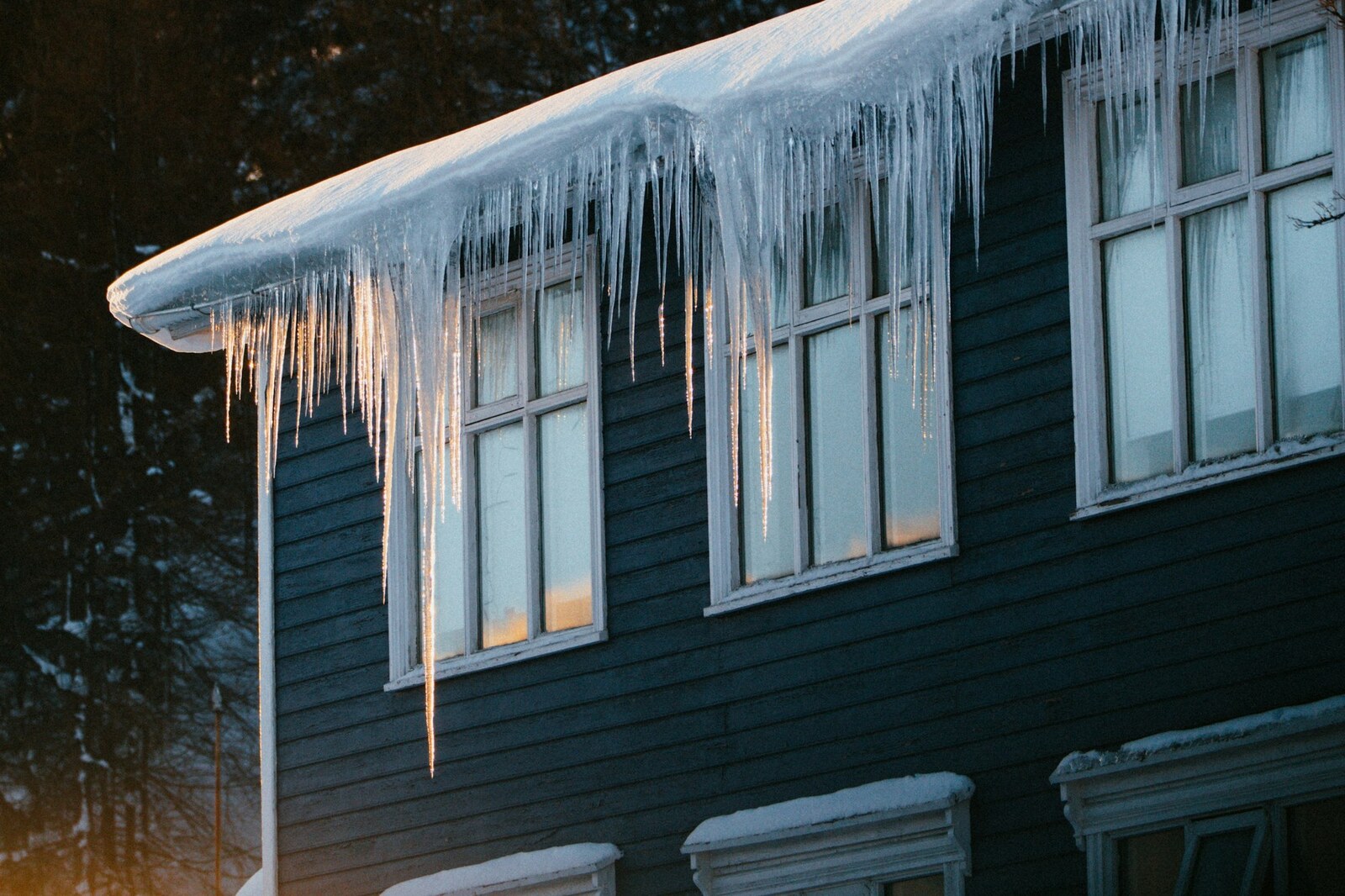
You know the look. A row of icicles hanging off the gutter, thick ice built up along the roof edge, and a wet stain spreading across the bedroom ceiling in February. Ice dams are the most destructive winter roof problem in Western New York, and almost every Rochester homeowner will deal with one eventually.
Here is the part most people get wrong: an ice dam is not a roof problem. It is a heat problem. Fixing the roof rarely fixes it. Understanding why is what lets you actually solve it instead of chipping at ice with a hammer every January.
How an Ice Dam Forms
The mechanism is straightforward once you see it:
- Heat escapes from the house into the attic, warming the underside of the roof deck.
- Snow sitting on that warmed section of roof melts, even though the outside air is below freezing.
- The meltwater runs down the roof until it reaches the eaves and the overhang, which are not warmed from below because there is no house under them.
- There it refreezes, building a ridge of ice.
- That ridge blocks the next round of meltwater, which pools behind it, backs up under the shingles, and gets into the house.
Shingles shed water flowing downhill. They are not designed to hold back standing water, so once it pools it finds the gaps and travels into the roof deck, the insulation, the walls, and eventually your ceiling.
The telltale sign that you have a heat problem rather than a weather problem: look at your roof after a snowfall. If bare patches melt off while your neighbour's roof stays evenly covered, your attic is heated. Even melting is what you want.
Why Rochester Homes Are Prone to This
Our climate provides exactly the wrong conditions: heavy snowfall that sits on roofs for weeks, sustained sub-freezing temperatures at the eaves, and repeated freeze and thaw cycling. Add older housing stock with modest insulation, plenty of air leaks, and roofs that were built before anyone thought about attic bypasses, and you have a region-wide problem.
The Real Fix, In Order
Everything effective comes down to keeping the roof deck cold. In priority order:
- Air sealing the attic floor. This is first and it is the biggest lever. Warm, moist air escaping upward is what heats the deck. The usual culprits are open wall top plates, recessed light housings, plumbing and wiring penetrations, the attic hatch, chimney chases, and bath fan housings. Sealing these makes more difference than any amount of added insulation.
- Insulation to a proper depth, across the whole attic floor and all the way out to the exterior walls, which is where coverage is usually thinnest and where ice dams start.
- Ventilation, balanced. Soffit intake and ridge exhaust flush out any heat that does get up there and keep the deck at outdoor temperature. Crucially, insulation must not block the soffits, which is the single most common defect we find. Baffles hold the insulation back and keep the air channel open.
- Duct every exhaust fan to the outdoors. Bath and kitchen fans discharging into the attic pump warm, wet air directly onto the cold deck. This causes both ice dams and attic frost.
- Seal and insulate attic ductwork if your HVAC runs up there, since leaky ducts heat the attic directly.
Notice that none of these involve the roof surface. That is the point.
If you are getting dams every winter, the diagnosis is worth doing properly rather than guessing. Have Ember Works assess your attic and we will find where the heat is escaping instead of treating the symptom.
What Helps, and What Does Not
Genuinely useful:
- Ice and water shield along the eaves. This is a self-adhering waterproof membrane installed under the shingles. It does not prevent dams, but it stops the backed-up water from getting into the house. It is standard practice in our climate and is the right time to add it when a roof is replaced.
- A roof rake to pull snow off the lower few feet of roof from the ground, removing the material that feeds the dam. Used from the ground, never from a ladder in winter.
- Heat cables, honestly, as a last resort. They create a channel for meltwater rather than solving the cause, they use electricity all winter, and they eventually fail. On a complex roof with a valley or dormer where the real fix is impractical, they have a place.
Not useful, or harmful: chipping ice with hammers, axes, or shovels, which destroys shingles and gutters and puts you on a ladder in the worst possible conditions. Salt tablets thrown on the roof, which stain and corrode. And gutter guards, which do not cause or cure ice dams either way.
The Conversions That Cause Dams
One important special case. If your attic has been converted to living space, or you have a cathedral ceiling, there is no cold attic to ventilate. These assemblies dam readily when built badly, and the fix is different: either a properly vented roof assembly with a continuous air channel from soffit to ridge behind the insulation, or an unvented assembly with closed-cell spray foam against the deck. Batts stuffed against the sheathing with no air gap is the failure mode, and it also rots the deck.
Fix the Cause, Once
Ice dams are miserable, expensive, and almost entirely preventable. The work is unglamorous, air sealing and insulation you will never see, and it happens to also cut your heating bill, make your second floor more comfortable, and extend the life of your shingles. Do it once properly and the icicles stop being an annual event.
As a design-build firm, Ember Works looks at the whole assembly rather than selling a single product, and we will tell you if the answer is a few hours of air sealing rather than something larger. Our build team, with 60 plus years of combined hands-on experience, seals attic bypasses, installs baffles, corrects blocked soffits, and repairs the water damage when a dam has already found its way in. Ember Works designs and builds across Rochester, Monroe County, and Western New York.
Ignite Your Home's Potential with Ember Works!
Call us today: 585-465-1674
Contact Us: www.emberworksroc.com/contact-us
Ready to Start Your Kitchen or Bathroom Project?
Ember Works is a design‑build firm in Rochester, NY. Our designers and our build team work under one roof, so you get a realistic budget before anything is drawn and one team accountable from the first sketch to the final walkthrough. We design and build custom kitchens and dream primary bathrooms across Rochester, Monroe County, and Western New York, backed by 60 plus years of combined hands-on experience.
‹ Back
Recent Posts
-

Inside the Cabinets: Pull-Outs and Fittings That Earn Their Keep
October 16, 2026
-
Sump Pumps and Backup Power: Basement Insurance Before Winter
October 13, 2026
-
Shower Waterproofing: The Membrane Behind Your Tile You Never See
October 10, 2026
-

Two Cooks, One Kitchen: Designing a Layout That Does Not Collide
October 7, 2026
-
Wet Rooms: The Shower-and-Tub Layout Gaining Ground in Rochester
October 4, 2026