



Website by 
Resources
Shower Waterproofing: The Membrane Behind Your Tile You Never See
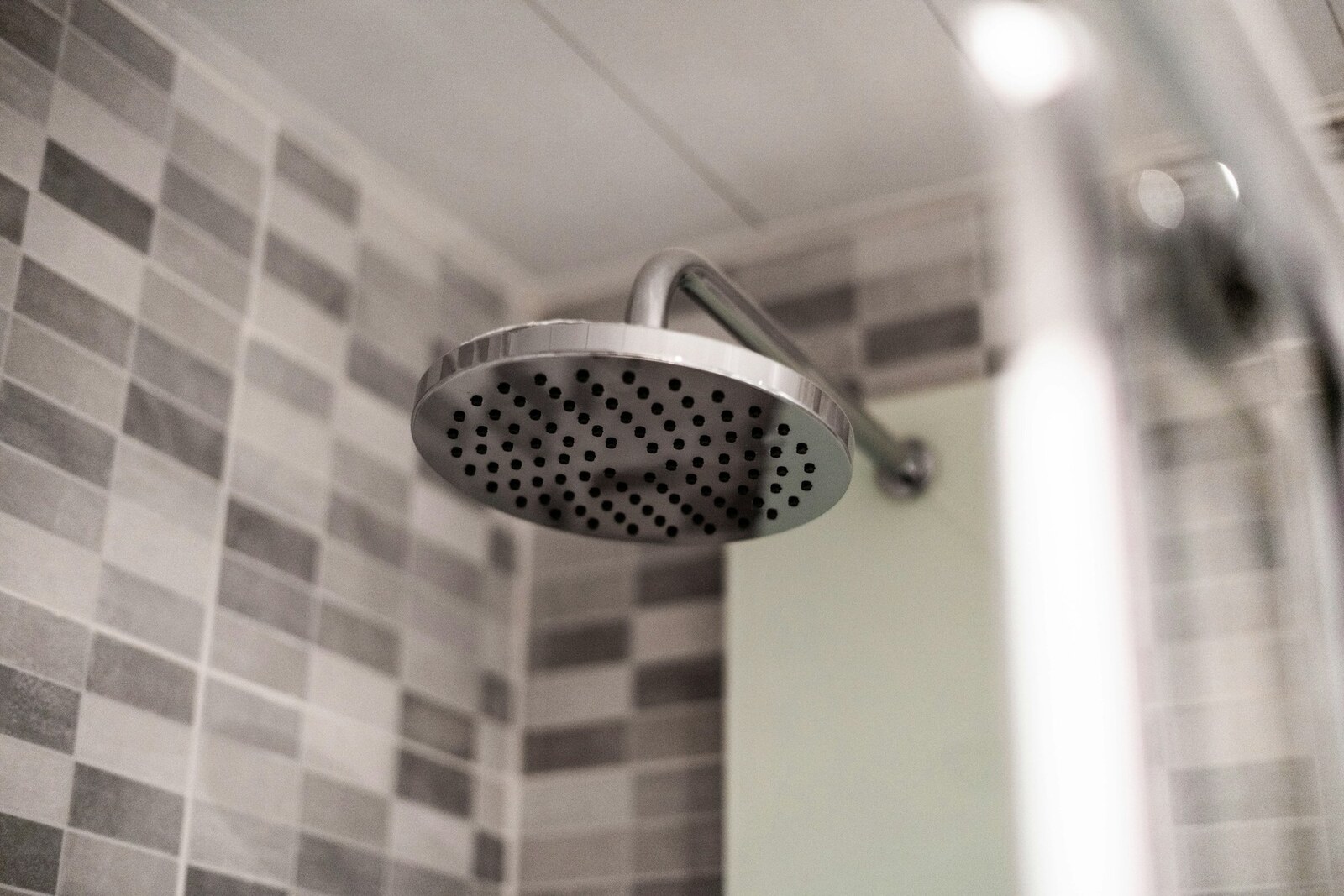
Here is an uncomfortable fact about bathrooms: tile is not waterproof. Neither is grout. Water passes through both, slowly and steadily, every time you shower. What keeps that water out of your floor joists is a system installed behind the tile that you will never see again once the job is done.
It is also the easiest place in a bathroom to save money, which is exactly why failed showers are one of the most common problems we are called in to fix. Here is what should be back there, and how to tell whether it was done properly.
What Failure Actually Looks Like
A shower does not fail dramatically. It fails quietly, over years, and by the time it is visible the damage is substantial. The signs:
- Loose or hollow-sounding tiles, especially low on the walls or in the corners, meaning the substrate behind them has broken down.
- Grout that keeps cracking in the same place no matter how often it is repaired, which usually means movement or a soft substrate underneath.
- A musty smell that cleaning does not touch.
- Staining on the ceiling below the bathroom, or on the wall outside the shower.
- Soft or springy floor at the shower threshold.
- Peeling paint or damaged flooring on the other side of the shower wall.
By the time water reaches a ceiling below, it has usually been travelling through framing for a long time. Repairs at that stage mean removing the shower entirely and often replacing subfloor and joists.
The Old Way, and Why It Fails
For decades the standard shower build in Rochester was tile over a cement mortar bed, with a rubber or lead pan liner under the floor. Done well by a skilled tile setter, this method genuinely lasts, and there are eighty-year-old showers here still performing.
What fails is the shortcut version that replaced it: tile set directly onto ordinary drywall or, worse, onto green board, which is moisture-resistant but not waterproof and turns to mush when it stays wet. If your shower was built in the 1980s or 1990s and has tile on drywall, it is not a question of whether water is getting into the wall, only how much.
How It Should Be Built Today
Modern systems are better, faster, and more forgiving, provided they are installed as a complete system rather than mixed and matched. There are two main approaches:
- Sheet or liquid membrane over a suitable backer board. Cement board or foam board goes up first, then a bonded waterproof membrane, either a sheet product rolled and lapped or a liquid applied in multiple coats, covers every surface including the floor, corners, and up the walls. Tile is then set directly on the membrane.
- Integrated foam board systems. Rigid foam panels that are themselves waterproof, sealed at the joints with banding and sealant, with matching pre-formed curbs, benches, niches, and sloped trays. These go up quickly and, because every component is from the same system, the details are engineered to work together.
Whichever is used, the non-negotiables are the same:
- Corners, seams, and changes of plane get treated with proper banding. This is where nearly all failures start.
- Pipe and valve penetrations get sealed with the manufacturer's collars, not smeared with caulk.
- The waterproofing runs continuously onto the floor and is bonded to the drain assembly. A bonding-flange drain is designed for this; an ordinary drain is not.
- Benches and niches are waterproofed and sloped so they shed water rather than pond it. A flat niche shelf is a small reservoir.
- The membrane extends well above the shower head and past the enclosure edges.
- Do not mix systems. One manufacturer's membrane with another's drain and a third's banding voids the engineering and the warranty.
A properly built shower can be flood-tested before tiling: plug the drain, fill the pan, and leave it for a day. Any competent installer will do this and any homeowner is entitled to ask for it. Ask Ember Works about your shower build and we will walk you through exactly what is going behind your tile.
Caulk, Grout, and What Maintenance Can and Cannot Do
Two things people get wrong about upkeep. First, every change of plane gets caulk, not grout. Inside corners, the joint where walls meet the floor, and around the drain all move slightly and grout is rigid, so it cracks. Flexible sealant belongs there.
Second, sealing grout is not waterproofing. Sealer reduces staining and slows absorption. It does nothing structural. A shower relying on grout sealer as its only defence is not waterproofed, it is postponed. Maintenance keeps a good shower looking good; it cannot rescue a bad build.
The Rochester Angle
Two local factors make this matter more here. Our long heating season means bathrooms swing between humid and very dry, and that movement works on rigid materials and opens joints. And in older homes with settled framing and out-of-square walls, substrate and slope have to be corrected rather than tiled over, or you end up with water sitting where it should be draining.
Pay for the Part You Cannot See
Of the whole bathroom budget, waterproofing is a small line. It is also the only line that determines whether the room is still sound in fifteen years. If a bid comes in noticeably low, this is the first place to ask what system is being used and whether the shower will be flood-tested.
As a design-build firm, Ember Works specifies a complete waterproofing system, installs it to the manufacturer's details, and tests it before a single tile goes on. Our build team, with 60 plus years of combined hands-on experience, also corrects the out-of-square framing and slope that older Rochester bathrooms almost always present. Ember Works designs and builds bathrooms across Rochester, Monroe County, and Western New York.
Ignite Your Home's Potential with Ember Works!
Call us today: 585-465-1674
Contact Us: www.emberworksroc.com/contact-us
Ready to Start Your Kitchen or Bathroom Project?
Ember Works is a design‑build firm in Rochester, NY. Our designers and our build team work under one roof, so you get a realistic budget before anything is drawn and one team accountable from the first sketch to the final walkthrough. We design and build custom kitchens and dream primary bathrooms across Rochester, Monroe County, and Western New York, backed by 60 plus years of combined hands-on experience.
‹ Back
Recent Posts
-
Shower Waterproofing: The Membrane Behind Your Tile You Never See
October 10, 2026
-

Two Cooks, One Kitchen: Designing a Layout That Does Not Collide
October 7, 2026
-
Wet Rooms: The Shower-and-Tub Layout Gaining Ground in Rochester
October 4, 2026
-
Ice Dams: Why They Form on Rochester Roofs and How to Stop Them
October 1, 2026
-
Designing a Primary Bathroom From Scratch: Layout and Plumbing Come First
September 28, 2026