





Website by 
Resources
Patio or Deck? Choosing the Right Outdoor Surface for Your Yard
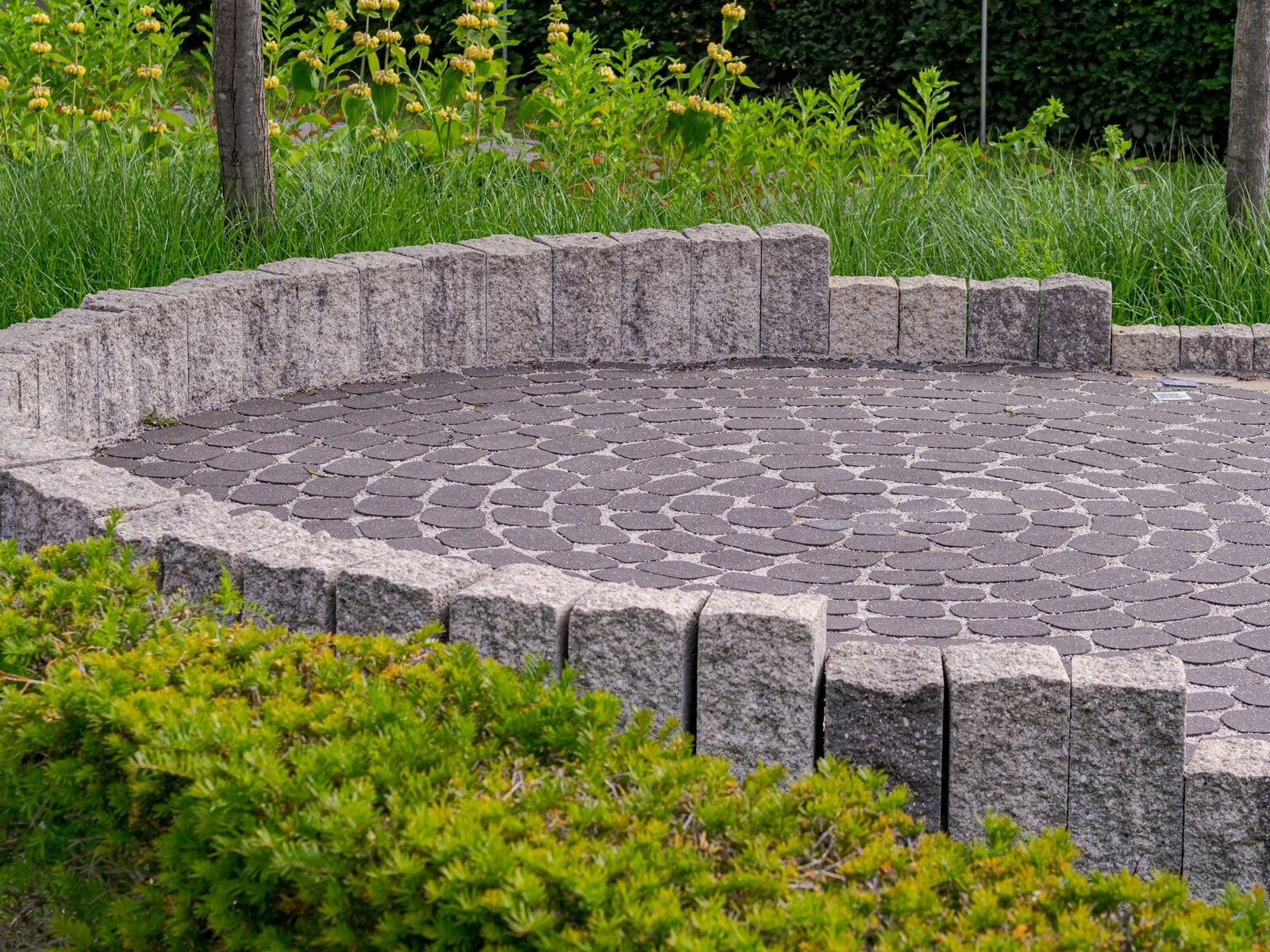
You want to spend more time in your backyard. The question is what to build: a deck raised off the ground, or a patio laid on it. Homeowners often arrive with a preference already formed, usually based on what a neighbour did, and then discover their own yard argues for the opposite.
The honest answer is that the site usually decides. Here is how to read yours, and what each option genuinely costs you over a Western New York lifetime.
Start With the Grade
Before anything else, look at where your back door sits relative to the ground.
If your door is well above grade, which describes most Rochester homes with a full basement, a deck is the natural answer. Building a patio would mean either a long flight of stairs down to it, or a great deal of fill and retaining work to bring the ground up. A deck simply extends the floor level of the house out into the air.
If your door is close to grade, or the yard is reasonably flat, a patio becomes very attractive. There is no structure to build, nothing to maintain, and the space feels connected to the garden rather than hovering above it.
If the yard slopes away steeply, a deck is usually far cheaper than the retaining walls and fill a patio would demand. And if the yard slopes toward the house, that is a drainage conversation before it is a patio conversation.
Honest Cost Over Time
Up front, a simple ground-level patio is often less expensive than a comparable deck, because you are not paying for footings, framing, and structural lumber. That gap widens for a large area and narrows or reverses for a small elevated one.
Over twenty years, the comparison shifts. A wood deck needs cleaning and resealing every few years, plus eventual board and fastener replacement. A composite deck needs washing but little else, at a higher initial price. A patio needs very little annual attention, but in our climate it will need occasional releveling as frost moves the base, and paver joints need sand topped up.
Neither is dramatically cheaper across a lifetime. Choose on site and use, not on a spreadsheet.
What Each One Is Actually Better At
A deck is better when you need to get out of the house at floor level, the yard is sloped or awkward, you want the space to feel like an outdoor room attached to the house, you want built-in benches and railings, or you want it built quickly. It also gives you usable storage underneath and can be built over ground you could never level.
A patio is better when the grade allows, you want zero structural maintenance, you want a fire pit or a heavy grill island without engineering for the load, you want a surface that stays cooler underfoot in July, or you want something that will still be there in forty years with minimal fuss. Stone and paver surfaces also suit certain Rochester architecture, particularly older homes with masonry, in a way that a wood deck does not.
And there is a third answer that is often the right one: both. A modest deck off the back door with steps down to a patio below gives you a dining level connected to the kitchen and a separate ground-level space for a fire pit and seating. It is a very common solution here precisely because it fits how our houses sit on their lots.
Working out which of these your yard is asking for is worth doing before you fall in love with a picture. Have Ember Works walk your yard and we will tell you what the grade, drainage, and access actually support.
The Western New York Details
- Frost is the deciding factor for both. A deck needs footings below the frost line. A patio needs a properly excavated and compacted base of the right depth, or freeze and thaw will heave it into an uneven surface within a few seasons. The base is the entire job on a patio, and it is where cheap installations cut corners you cannot see.
- Drainage. A patio must be pitched to shed water away from the house. A flat patio against a foundation is a wet basement waiting to happen.
- Snow removal. A patio can be shovelled or even plowed. A deck needs care, plastic shovels and no metal edges, and salt choice matters on both.
- Sun and shade. A south or west-facing space bakes in July. Our outdoor season is short enough that shade planning, whether a pergola, an awning, or a tree, decides whether you actually use the space in midsummer.
- Permits. Decks generally require them. Patios often do not, though that varies by municipality and by whether you are altering drainage. Worth confirming before you start.
Materials in Brief
On the deck side, the choice is pressure-treated, cedar, or composite, each trading up-front cost against maintenance. On the patio side, concrete pavers offer the widest range of looks and can be lifted and relaid if settling occurs; natural stone is the most beautiful and the most expensive; poured concrete is economical over large areas but cracks are a matter of when rather than if in a freeze and thaw climate, which is why control joints matter.
Build for the Yard You Have
The most common regret we hear is not about material choice. It is a space that turned out too small, or one that sits in full sun with nowhere to hide, or one that was built where the grade fought it. Sort out the site, the size, and the shade first. The surface is the easier decision.
As a design-build firm, Ember Works starts with how your house meets your yard rather than with a product. Our build team, with 60 plus years of combined hands-on experience, sets deck footings below frost and builds patio bases to a depth that survives our winters. Ember Works designs and builds decks, patios, and outdoor spaces across Rochester, Monroe County, and Western New York.
Ignite Your Home's Potential with Ember Works!
Call us today: 585-465-1674
Contact Us: www.emberworksroc.com/contact-us
Ready to Start Your Kitchen or Bathroom Project?
Ember Works is a design‑build firm in Rochester, NY. Our designers and our build team work under one roof, so you get a realistic budget before anything is drawn and one team accountable from the first sketch to the final walkthrough. We design and build custom kitchens and dream primary bathrooms across Rochester, Monroe County, and Western New York, backed by 60 plus years of combined hands-on experience.
‹ Back
Recent Posts
-
Patio or Deck? Choosing the Right Outdoor Surface for Your Yard
September 13, 2026
-
Deck Stairs and Access: Safety, Code, and Getting the Rise Right
September 10, 2026
-
-

Gutters, Downspouts, and Where Your Roof Water Actually Goes
September 4, 2026
-

Storm Damage: What Rochester Homeowners Should Do in the First 48 Hours
September 3, 2026