



Website by 
Resources
Kitchen Sinks and Faucets: Choosing What You Use Twenty Times a Day
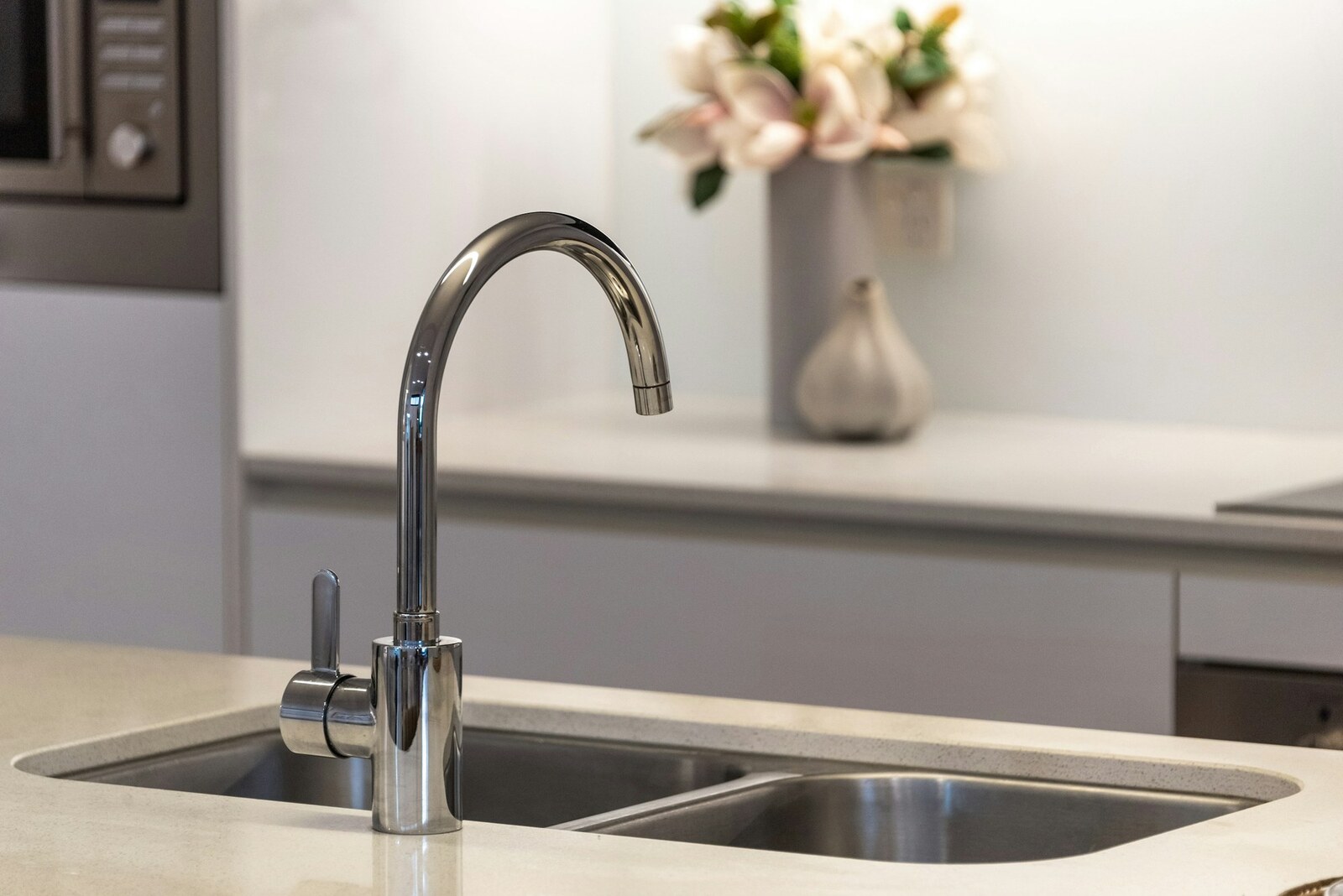
You touch your kitchen faucet more than any other fixture in your house, and you stand at the sink for a substantial part of the time you spend in the kitchen. Yet sinks and faucets are routinely chosen at the end of a project from whatever is in stock, after all the attention has gone to cabinets and counters.
They are also one of the few kitchen decisions with real functional consequences. Here is what actually matters.
Sink Material: Four Real Options
- Stainless steel. The default, and a good one. Light, tough, heat-proof, and it will not chip or stain. The specification to look at is gauge, the thickness of the steel: a lower gauge number means thicker metal, which resists denting and, importantly, is much quieter. Cheap thin sinks boom when water hits them. Good ones have sound-deadening pads underneath. Downsides are water spots and fine scratches, though a brushed finish hides both and the scratches eventually blend into a patina.
- Fireclay. Ceramic clay fired at very high temperature, the classic farmhouse material. Beautiful, thick, genuinely durable, resistant to staining and heat, and it suits Rochester's older homes better than anything else. It is heavy, which means the cabinet must be built to carry it, and a dropped glass will break rather than bounce. Chipping is possible though uncommon in good products.
- Composite granite. Crushed stone bound with resin. Very hard, resists scratches and stains well, hides water spots, and comes in matte colours that look excellent in a modern kitchen. It is quieter than thin stainless. It can be damaged by very high heat, so a pan straight off the burner is a risk, and light colours can discolour with hard water over time.
- Cast iron with enamel. Traditional, extremely heavy, wonderful to look at. The enamel can chip and it will dull under abrasive cleaners. Needs serious cabinet support.
Configuration: The Single Bowl Argument
The old default was a double bowl, one side for washing and one for rinsing. Dishwashers made that largely obsolete, and the modern default is a single large bowl, for a simple reason: you can lay a roasting pan or a baking sheet flat in it. In a double bowl, neither side is big enough for the things that are hardest to wash.
Where a double still makes sense is a household that hand-washes a lot, or where a small secondary bowl with the disposal keeps the main bowl clear. A useful compromise is an offset double with one large and one small bowl.
Beyond that, two more decisions:
- Undermount versus drop-in. Undermount, where the sink hangs below the counter, is the standard with stone and quartz and it lets you sweep crumbs straight into the bowl with no lip to catch them. Drop-in sits on top with a visible rim and is the option for laminate counters.
- Apron front, the farmhouse sink. The front panel is exposed and the sink sits forward, which brings the bowl closer to you and is genuinely more comfortable to stand at. It requires a purpose-built cabinet, so it must be decided before the cabinet order, not after.
- Depth. Deeper bowls hide more dishes but require more bending. Very deep sinks can also be uncomfortable for shorter users. Around nine to ten inches suits most people.
Because the apron-front and heavy-material decisions change the cabinetry, they belong in the design conversation. Bring your kitchen plans to Ember Works and we will make sure the cabinet is built for the sink you actually want.
Faucets: The Features That Matter
- A pull-down sprayer. Effectively standard now and rightly so. A single high-arc faucet with a pull-down head does everything a separate side sprayer used to, without a second hole and a second thing to fail. Check that the hose retracts smoothly with a proper counterweight; poor retraction is the most common complaint.
- Height and reach. A tall arc gives clearance for filling pots, but a very high faucet over a shallow sink splashes. Check the spout reaches to the centre of the bowl. Also check clearance if there is a window behind the sink that opens inward, which catches out a lot of Rochester kitchens.
- Valve quality. Ceramic disc cartridges are the durable standard. This is the part that eventually drips, and buying a brand whose cartridges are still available in a decade matters more than the finish.
- Single handle versus two. Single is more practical, operable with a wrist or an elbow when your hands are covered. Two-handle bridge faucets look right in period kitchens and are less convenient.
- Touch and motion activation. Genuinely useful with raw chicken on your hands. It adds electronics and a battery under the sink, which is one more thing to service.
- A pot filler at the range. Worth it if the sink is deliberately located away from the cooking zone. It needs a water line run to that wall, decided at rough-in.
Finish, and the Hard Water Reality
Much of the Rochester area has hard water, and that shapes finish choice more than fashion should. Polished chrome and stainless hide water spots best and are the most durable. Matte black looks superb and shows every spot and fingerprint, which is worth knowing before you commit. Brushed brass and gold have proven more durable than expected in living finishes but vary a lot by manufacturer. Whatever you choose, coordinate it with your cabinet hardware and, if it is visible from the same spot, your lighting.
What Goes Underneath
Two practical items decided at the same time. A disposal, if you want one, needs to be matched to the sink and consumes under-sink space; note that some septic systems are not suited to them. And filtered water, whether an undersink filter with its own small tap or a filter feeding the main faucet, needs to be planned so the cabinet has room for the housing and the cartridge can be changed without dismantling everything.
Choose These Early, Not Last
The sink dictates the cabinet. The faucet dictates the number of holes drilled in your counter, which is done at the fabricator, before the counter arrives. Both need to be selected before templating, and both are decisions you will feel every single day.
As a design-build firm, Ember Works settles the sink and faucet during design so the cabinet, the counter cutout, and the plumbing rough-in all match. Our team, with 60 plus years of combined hands-on experience, builds the support a heavy fireclay or cast iron sink needs and handles the supply and filtration behind it. Ember Works designs and builds custom kitchens across Rochester, Monroe County, and Western New York.
Ignite Your Home's Potential with Ember Works!
Call us today: 585-465-1674
Contact Us: www.emberworksroc.com/contact-us
Ready to Start Your Kitchen or Bathroom Project?
Ember Works is a design‑build firm in Rochester, NY. Our designers and our build team work under one roof, so you get a realistic budget before anything is drawn and one team accountable from the first sketch to the final walkthrough. We design and build custom kitchens and dream primary bathrooms across Rochester, Monroe County, and Western New York, backed by 60 plus years of combined hands-on experience.
‹ Back
Recent Posts
-
Kitchen Sinks and Faucets: Choosing What You Use Twenty Times a Day
October 25, 2026
-
Flooring Face-Off: Hardwood, Engineered, Vinyl Plank, and Tile
October 22, 2026
-
Shower Systems: Valves, Rain Heads, and Body Sprays
October 19, 2026
-
Inside the Cabinets: Pull-Outs and Fittings That Earn Their Keep
October 16, 2026
-

Sump Pumps and Backup Power: Basement Insurance Before Winter
October 13, 2026