




Website by 
Resources
Interior Stairs and Railings: The Feature Hiding in Plain Sight
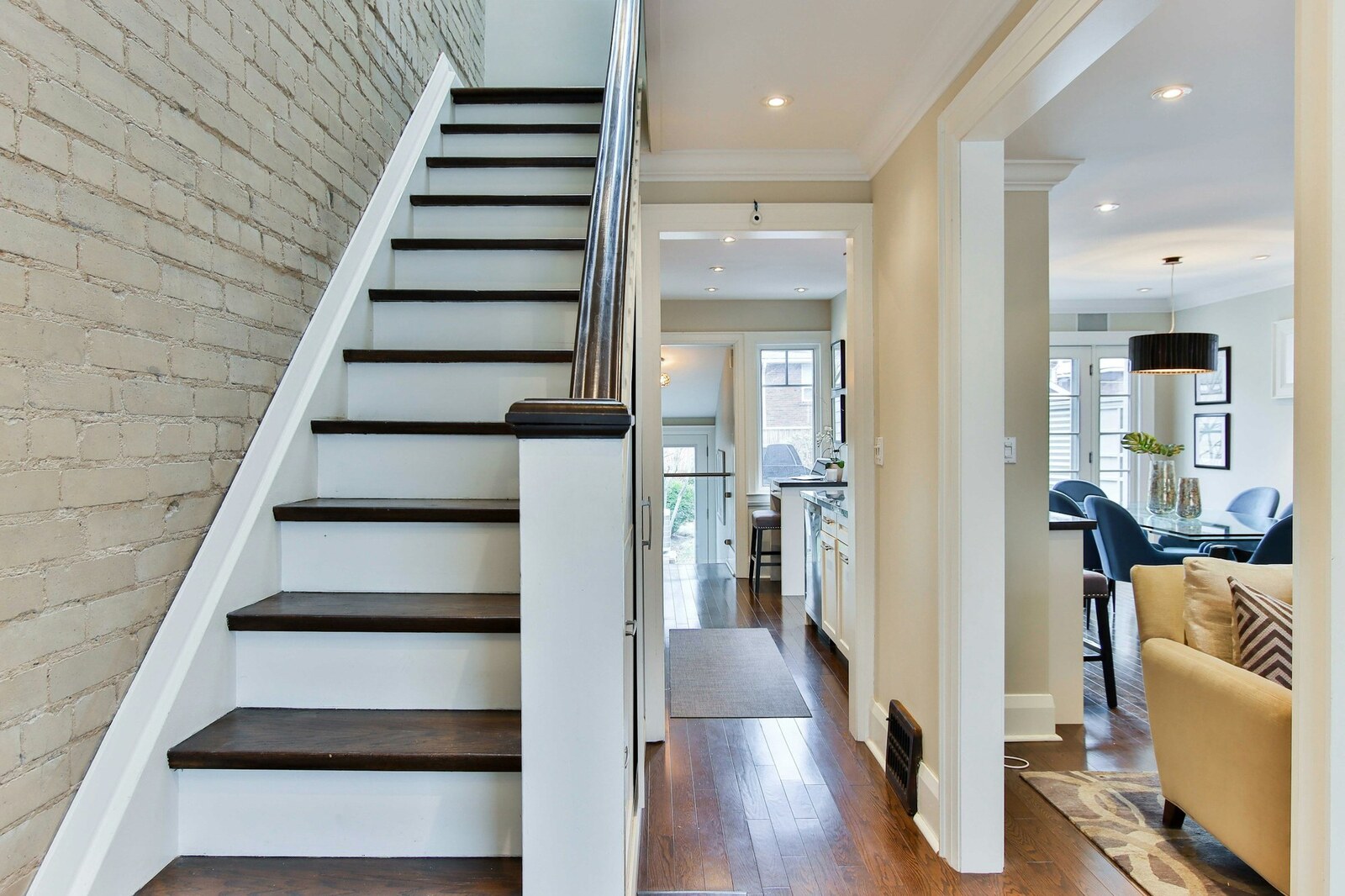
The staircase is usually the first thing you see when you walk into a Rochester home, and it is almost never on the renovation list. People remodel the kitchen they cook in and the bathroom they wash in, and they walk past the stairs four hundred times a week without registering them. Which is a shame, because in most older homes here the staircase is the single best piece of joinery in the house, and in most newer ones it is the easiest thing to dramatically improve.
A stair project is contained, does not involve plumbing, and changes the impression the whole house makes. Here is what is worth doing.
What You Already Have
Before changing anything, find out what is under there. In a pre-war Rochester home, the staircase was often built from quartersawn oak, chestnut, or maple by someone who knew what they were doing, and then painted over in the 1970s or carpeted in the 1990s. Stripping paint off a good newel post and balustrade, or pulling carpet to find solid oak treads underneath, is one of the more satisfying discoveries in old-house work.
What to check:
- Pull a corner of the carpet on a tread and a riser to see the material and its condition. Treads are often solid hardwood even where risers are paint-grade.
- Look at the newel post and balusters. Turned or carved originals are worth restoring. Note that in pre-1978 homes, existing paint layers may contain lead, so stripping is work for someone following safe practices rather than a weekend with a heat gun.
- Check the stringers and the underside if you have access from below. Separation, movement, and old repairs show up there first.
Fixing the Squeak and the Wobble
Two complaints cover most stairs. Both are fixable and both are symptoms worth understanding.
Squeaks come from movement, usually a tread that has shrunk away from its riser or stringer and now rubs under load. The reliable repair is from underneath where the stair is open: glue blocks and screws pulling the joint tight again. Where there is no access from below, treads can be screwed and plugged from above, which is more visible but effective. Surface fixes like talc in the joint buy weeks, not years.
A wobbly newel post is a safety issue, not a cosmetic one, because the newel anchors the entire handrail system. A loose one means the railing cannot be relied on in a fall. Properly fixing it means getting to the base and re-anchoring it to structure, which sometimes means opening a small area of ceiling or floor below. It is worth doing right.
The Upgrades With the Biggest Visual Return
- Replacing balusters. Swapping tired wood spindles for a different profile, or for slim metal balusters, transforms a staircase in a day or two and costs a fraction of a full rebuild. It is the highest-impact stair change available.
- A new handrail. A substantial, well-shaped rail feels different in the hand and reads as quality immediately.
- Two-tone treatment. Stained treads and handrail with painted risers, stringers, and balusters is the most-requested look right now, and it suits both period and modern homes.
- A runner. Carpet running up the centre with the wood exposed at the edges cuts noise, adds traction, and is far better looking than wall-to-wall. In a house with children or older residents, the traction genuinely matters.
- Opening up a closed stair. Removing a wall along one side of a boxed-in staircase and replacing it with a balustrade brings light into a dark hall and makes an entry feel twice the size. This is structural work and needs assessment, but the effect is dramatic.
- Lighting. Recessed step lights, a wall sconce at the landing, or a proper fixture over the stairwell. Stairs are the most dangerous place in a house to be poorly lit.
Whether a stair can be opened up, and what a newel repair actually involves, are both things worth assessing before you plan around them. Ask Ember Works to look at your staircase and we will tell you what is original, what is salvageable, and what it takes.
Code Is Not Optional Here
Stairs are one of the most heavily regulated elements in a house, for the obvious reason. If you are rebuilding rather than refinishing, expect requirements covering riser height and tread depth and, critically, how little those may vary across a flight; handrail height and graspability; guard height on open sides; baluster spacing tight enough that a small child cannot pass through; and headroom above the flight.
Older Rochester staircases very often do not meet current standards, with steep risers and shallow treads being the usual issue. Existing stairs are generally allowed to remain as they are, but the moment you rebuild, current code applies. That is worth knowing before you commit, because a compliant stair sometimes needs more floor space than the original occupied.
The Detail Everyone Sees
A staircase is architecture you use with your hands and feet. It is also, in most Rochester homes, the focal point of the entry and the first impression a guest forms. Refinishing one is a contained project with an outsized effect, and restoring an original one preserves something that cannot be bought new.
As a design-build firm, Ember Works treats original stair joinery as an asset worth saving and knows when a rebuild is the honest answer instead. Our team, with 60 plus years of combined hands-on experience, re-anchors newels properly, matches turned profiles, and builds to current code where code applies. Ember Works designs and builds restorations and renovations across Rochester, Monroe County, and Western New York.
Ignite Your Home's Potential with Ember Works!
Call us today: 585-465-1674
Contact Us: www.emberworksroc.com/contact-us
Ready to Start Your Kitchen or Bathroom Project?
Ember Works is a design‑build firm in Rochester, NY. Our designers and our build team work under one roof, so you get a realistic budget before anything is drawn and one team accountable from the first sketch to the final walkthrough. We design and build custom kitchens and dream primary bathrooms across Rochester, Monroe County, and Western New York, backed by 60 plus years of combined hands-on experience.
‹ Back
Recent Posts
-
Interior Stairs and Railings: The Feature Hiding in Plain Sight
September 19, 2026
-

Kids' Bedrooms and Nurseries: Remodeling for a Growing Family
September 16, 2026
-
Patio or Deck? Choosing the Right Outdoor Surface for Your Yard
September 13, 2026
-
Deck Stairs and Access: Safety, Code, and Getting the Rise Right
September 10, 2026
-