




Website by 
Resources
Range Hoods and Kitchen Ventilation: Clearing the Air in a Tight Rochester House
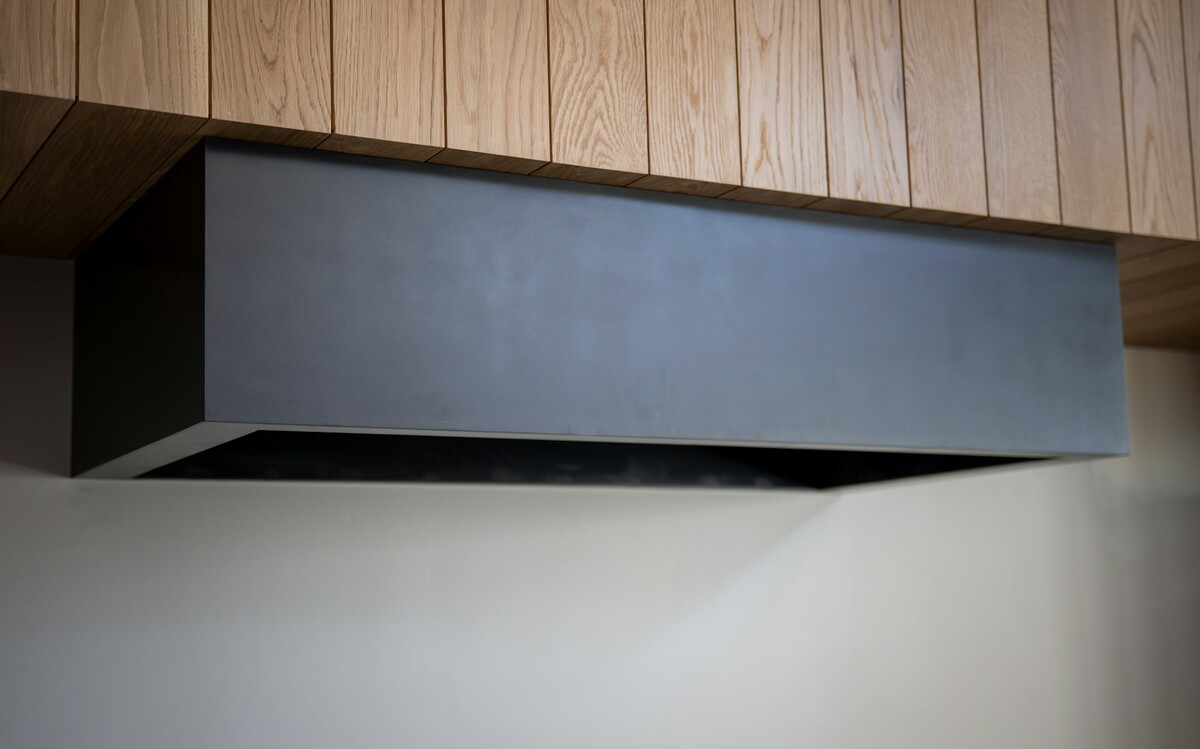
Of all the decisions in a kitchen remodel, the range hood is the one most often treated as a styling choice. People pick it for the way it looks over the cooktop, and then spend the next fifteen years with a smoke alarm that goes off every time they sear a steak, cabinets that turn tacky with grease, and a house that smells like last night's dinner until lunchtime.
A good hood is not complicated, but it does need to be specified properly. Here is what actually matters, and what changes in Rochester homes, where the heating season is long and the windows stay shut for five months of the year.
Why Ventilation Matters More Than It Used To
Older Rochester houses were drafty. Air leaked in around every window and out through every gap in the attic, and that constant exchange quietly carried cooking smells and moisture out of the house. Nobody designed it that way, but it worked.
Once a house has been insulated, air sealed, and fitted with new windows, that accidental ventilation disappears. That is good for your heating bill and bad for your air quality. Cooking produces grease, moisture, combustion byproducts if you cook with gas, and fine particles, and in a tight house they have nowhere to go unless you give them a path. The hood is that path.
Ducted Versus Recirculating
This is the first and most important decision.
- Ducted hoods pull air from the cooktop and send it outside through a duct. This is the only type that actually removes heat, moisture, and odor from the house.
- Recirculating (ductless) hoods pull air through a grease filter and a charcoal filter and blow it back into the kitchen. They catch some grease and some odor. They remove no moisture and no heat, and the charcoal filters need replacing regularly to do even that.
Our advice is simple: duct it outside whenever it is physically possible. A recirculating hood is a compromise for situations where a duct cannot reach an exterior wall or the roof, such as an island in the middle of a condo with concrete floors above. In most Rochester houses, with a basement below and an attic or exterior wall within reach, a duct route can be found, and it is worth paying for.
Sizing: Width Comes Before Airflow
Everyone asks about CFM, the airflow rating. Width and placement matter at least as much.
- Width: the hood should be at least as wide as the cooking surface, and ideally three inches wider on each side. Smoke and steam rise in a plume that spreads as it climbs. A hood the same width as the range misses the edges.
- Depth: it should cover the front burners, which is where most cooking happens and where most hoods fall short.
- Height: most manufacturers call for roughly 24 to 30 inches above the cooktop. Mount it too high and it captures far less, regardless of the fan rating.
- Island hoods need more capacity than wall hoods, because there is no wall behind the cooktop to help contain the plume and cross drafts pull it sideways.
As for airflow, a typical electric or induction cooktop in a family kitchen is well served by a properly sized hood in the 300 to 400 CFM range. Large gas ranges with high-output burners and griddles need more, and the manufacturer's recommendation for your specific range is the place to start. Bigger is not automatically better, for reasons covered next.
Makeup Air: The Part Nobody Mentions
Every cubic foot of air a hood pushes outside has to be replaced by a cubic foot coming in from somewhere. In a drafty house, it leaks in on its own. In a tight house, a powerful hood will pull air back down the chimney, through the water heater flue, or out of the fireplace, which is a real safety concern with fuel-burning appliances.
Residential codes require a makeup air system when a kitchen exhaust is rated above 400 CFM. That typically means a dampered duct that opens when the hood runs, often tied to the hood controls, and sometimes with a heater so you are not pulling January air straight into the kitchen. It adds cost and it needs planning, which is exactly why the hood should be specified early in the design, not picked off a showroom wall at the end.
If you are planning a kitchen and are not sure what your range really needs, talk to Ember Works about your kitchen ventilation before the cabinet layout is finalized. The duct route often determines where the range can go.
Ducting Done Right
The best hood in the world performs poorly through a bad duct. A few rules we follow on every job:
- Use the full duct diameter the hood calls for. Reducing it to fit an existing hole chokes the fan.
- Smooth, rigid metal duct, not flexible foil.
- Keep it short and straight. Every elbow adds resistance equal to several feet of straight run.
- Terminate outside with a proper wall or roof cap and a backdraft damper. Never into the attic, the soffit, or a wall cavity. We still find hoods venting into attics in older homes, and the result is grease and moisture soaking into insulation and framing.
- Seal and insulate the duct where it passes through unheated space, so it does not condense and drip back down in winter.
Styles and Where They Work
- Wall-mount chimney hoods are the classic look over a range on an exterior wall and perform well because the wall helps contain the plume.
- Custom wood or plaster hoods wrap a hood insert in a surround that matches the cabinetry. They are a strong design statement, and the insert inside is what does the work, so do not skimp on it.
- Under-cabinet hoods are the practical choice in a compact kitchen with cabinets above the range.
- Island hoods are dramatic and need the most care in sizing and ducting.
- Downdraft vents rise from behind the cooktop. They keep sightlines open on an island, but they fight physics, pulling hot air down when it wants to rise, and they struggle with tall pots and high heat.
- Microwave hoods save space but capture poorly. In a remodel, we usually recommend moving the microwave elsewhere and giving the range a real hood.
Noise and Controls
A hood nobody turns on because it sounds like a jet engine is not helping anyone. Look at the noise rating at the setting you will actually use, not just the lowest speed. Remote or inline blowers, mounted in the duct run or on the exterior wall, move the motor away from the kitchen and make a dramatic difference. Some hoods also offer automatic sensors that kick on when the cooktop heats up and a delayed shut-off that keeps running for a few minutes after you finish.
Plan It Early, Use It Every Time
A range hood is equipment, not decoration. Choose the cooking appliance, then size the hood to it, then plan the duct route and makeup air, and only then pick the style that wraps around it. Run it every time you cook, starting a minute or two before you turn on the burner, and clean the grease filters every month or two.
As a design-build firm, Ember Works plans ventilation as part of the kitchen layout from the first drawing, including duct routes through Rochester's older framing and makeup air for high-output ranges. Our team brings 60 plus years of combined hands-on experience to every kitchen. When you are ready, schedule your kitchen consultation and we will help you get it right. Ember Works serves Rochester, Monroe County, and Western New York.
Ignite Your Home's Potential with Ember Works!
Call us today: 585-465-1674
Contact Us: www.emberworksroc.com/contact-us
Ready to Start Your Kitchen or Bathroom Project?
Ember Works is a design‑build firm in Rochester, NY. Our designers and our build team work under one roof, so you get a realistic budget before anything is drawn and one team accountable from the first sketch to the final walkthrough. We design and build custom kitchens and dream primary bathrooms across Rochester, Monroe County, and Western New York, backed by 60 plus years of combined hands-on experience.
‹ Back
Recent Posts
-
Grout-Free Shower Walls: Slab, Panel, and Large-Format Porcelain Options
November 27, 2026
-

Countertop Edges, Waterfall Ends, and Getting the Thickness Right
November 25, 2026
-

Kitchen Soffits: Remove Them, Disguise Them, or Work With Them?
November 22, 2026
-

Cabinet Hardware and Mixing Metals: Small Choices, Big Difference
November 22, 2026
-
Bathroom Mirrors and Vanity Lighting: Getting Ready in Good Light
November 19, 2026