



Website by 
Resources
Composite vs. Wood Decking: An Honest Comparison for Western New York Weather
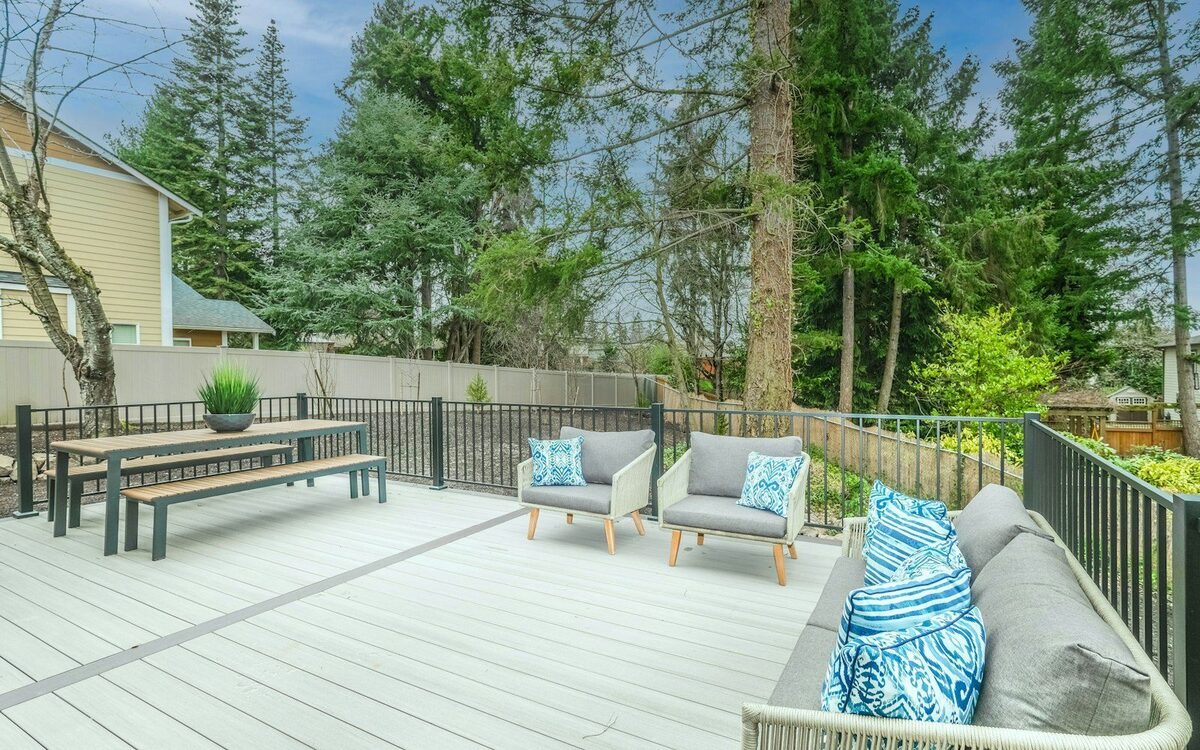
If there's one debate that comes up on nearly every deck project we design in Rochester, it's this one: composite or wood? Ask three neighbors and you'll get three confident, contradictory answers — usually based on a deck they built fifteen years ago, when both materials were very different products.
Here's the honest truth: both materials can build a great deck in Western New York, and both have real trade-offs. The right answer depends on how you weigh upfront cost against maintenance, how long you plan to stay, and how much time you genuinely want to spend with a stain brush every couple of summers.
What makes this decision different here than in, say, Arizona, is our weather. Rochester decks endure lake-effect snow sitting on them for months, dozens of freeze-thaw cycles a winter, humid summers, and the occasional 50-degree temperature swing in a single week. So let's compare these materials the way they actually perform here.
The Upfront Cost Difference
No surprise: wood wins the sticker-price battle. As typical Rochester-market planning ranges for materials and installation:
- Pressure-treated pine decking: the budget-friendly baseline — often 30–50% less than composite upfront
- Cedar: a step up in price and looks, naturally rot-resistant
- Composite decking: typically the premium option upfront, with wide price tiers between entry-level and top-shelf lines
On a typical mid-size deck, choosing composite over pressure-treated wood commonly adds several thousand dollars to the project. That's real money — which is why the maintenance side of the ledger matters so much.
The Maintenance Reality in a Rochester Climate
This is where Western New York weather puts its thumb on the scale.
Wood: Beautiful, but It Demands a Relationship
A wood deck in Rochester needs regular care to stay sound and good-looking:
- Cleaning and re-staining or sealing roughly every 2–3 years
- Inspection for soft spots, splinters, and popped fasteners each spring
- Board replacement as boards check, cup, and crack over time
- Snow and standing moisture accelerate all of the above
Figure a few hundred dollars in materials plus a weekend or two of labor (or hiring it out) every couple of years. Over 15–20 years, the maintenance spending on a wood deck can quietly approach the upfront premium you skipped — and that's if you actually keep up with it. Skipped maintenance is how a wood deck's lifespan drops from 20+ years to 10–15.
Composite: Pay Once, Then Mostly Just Live On It
- No staining, sealing, or sanding — ever
- Cleaning is soap, water, and a brush once or twice a year
- Won't rot, splinter, or invite carpenter ants
- Modern capped composites resist the fading and staining that plagued early-generation boards
- Manufacturer warranties on quality lines often run 25–50 years
One myth worth retiring: composite is not "maintenance-free," just low-maintenance. It still needs cleaning, and shaded north-side decks in our humid summers can grow mildew on any surface if ignored.
How Each Handles Freeze-Thaw, Snow, and Sun
Rochester-specific performance notes from a team that's built and repaired plenty of both:
- Moisture cycling: wood absorbs water, then freezes, then thaws — that's what drives checking, cupping, and popped fasteners. Composite is far more dimensionally stable through our winters
- Snow removal: a plastic shovel is fine on both; metal blades can gouge either, but a gouged composite board can't be sanded out the way wood can
- Summer heat: darker composite boards get noticeably hot underfoot in July sun — choose lighter colors for a south-facing deck
- Traction: quality modern composites have textured surfaces; smooth, algae-slicked wood in a wet April can actually be the slipperier of the two
- Fading: cedar and pine silver out without stain; capped composite holds its color for decades
Looks, Feel, and the Intangibles
Some homeowners will simply never love plastic-era materials, and that's fair. Real wood has warmth, smell, and a natural variation that composite imitates but doesn't duplicate — though the latest premium composite lines are genuinely impressive, with realistic grain and multi-tonal color. On the flip side, the homeowner who loves wood in year one is sometimes the same one cursing it in year six when it's due for its third re-stain. Be honest with yourself about which person you are.
A Quick Decision Guide
Wood might be your answer if:
- Upfront budget is the controlling factor
- You genuinely enjoy (or don't mind hiring out) periodic refinishing
- You love the look and feel of real wood, full stop
- You may reconfigure or expand the deck within a decade
Composite might be your answer if:
- You're staying 10+ years and want to amortize the upfront premium
- Your weekends are for the lake, not the stain brush
- The deck gets heavy snow load and shade — wood's hardest conditions
- You want consistent color and a long warranty
One hybrid worth knowing: many of our clients choose composite decking and railings over a pressure-treated wood frame — that's the standard, cost-smart approach, since the structure is protected from sun and surface wear. Just make sure the framing details (joist tape, proper flashing, correct fasteners) are done right, because the frame still has to outlive those 25-year deck boards.
Whichever You Choose, the Build Quality Matters More
Here's the part the material brochures won't tell you: in our climate, more decks fail from poor construction than from the wrong decking choice. Ledger flashing, footing depth below our frost line, joist protection, and drainage details determine whether your deck shrugs off Rochester winters or fights them. Our build team brings 60+ years of combined hands-on experience to those details, and because we're a design-build firm, the design phase is where we'll help you weigh materials against your budget, site, and plans honestly. Still on the fence between boards? Talk it through with Ember Works — we'll bring samples and straight answers, not a sales pitch for either side.
Let's Build a Deck That's Ready for Every Season
Composite or wood, the goal is the same: a deck you're grilling on in July and not worrying about in January. If this is the year you finally build it, let's start the conversation.
Ignite Your Home's Potential with Ember Works!
Call us today: 585-465-1674
Contact Us: www.emberworksroc.com/contact-us
Ready to Start Your Kitchen or Bathroom Project?
Ember Works is a design‑build firm in Rochester, NY. Our designers and our build team work under one roof, so you get a realistic budget before anything is drawn and one team accountable from the first sketch to the final walkthrough. We design and build custom kitchens and dream primary bathrooms across Rochester, Monroe County, and Western New York, backed by 60 plus years of combined hands-on experience.
‹ Back
Recent Posts
-
Kitchen Work Zones: Why the Work Triangle Is Not Enough Anymore
September 25, 2026
-

Choosing Paint Colors That Actually Work in Rochester's Light
September 22, 2026
-
Interior Stairs and Railings: The Feature Hiding in Plain Sight
September 19, 2026
-

Kids' Bedrooms and Nurseries: Remodeling for a Growing Family
September 16, 2026
-
Patio or Deck? Choosing the Right Outdoor Surface for Your Yard
September 13, 2026