


Website by 
Resources
Bathroom Tile Trends Rochester Homeowners Are Loving Right Now
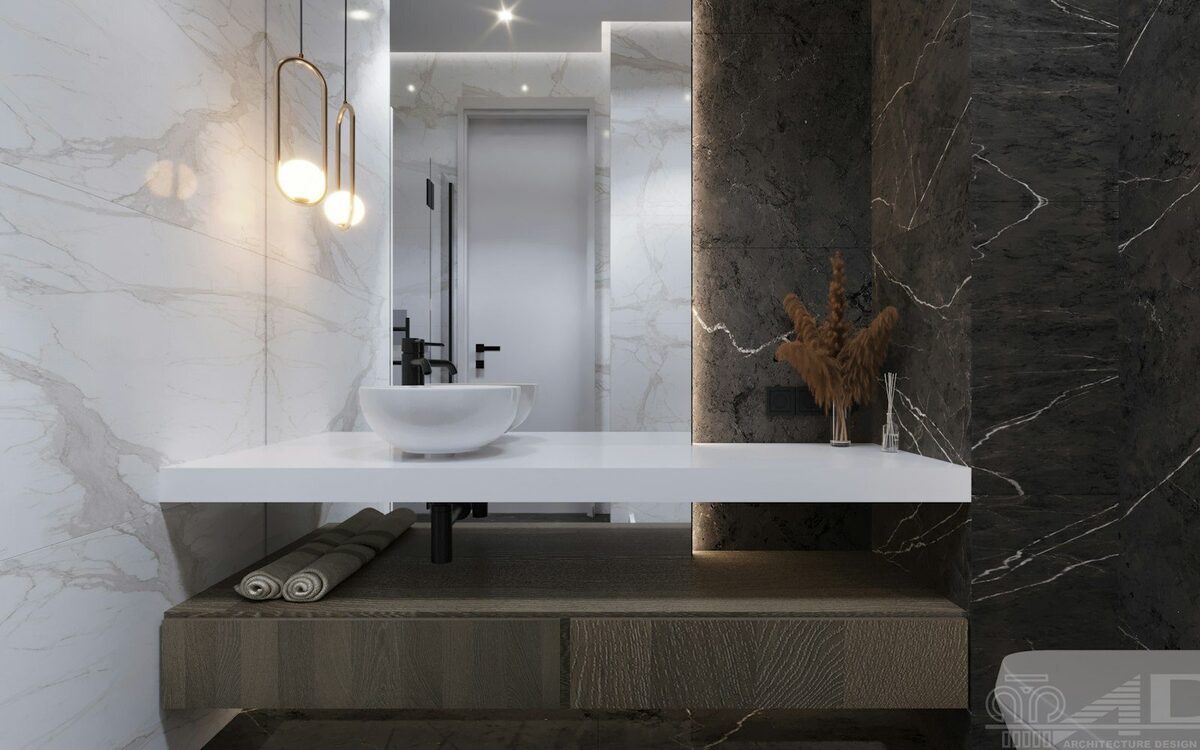
Tile is where a bathroom finds its personality. Vanities and fixtures matter, but the tile is what you see from floor to ceiling, what sets the mood the moment you walk in, and — let's be honest — what you'll be living with for the next fifteen or twenty years. Choose well and the room feels intentional every single day. Choose purely on trend and you may be staring at a decision you regret by the time your kids hit middle school.
The good news for Rochester homeowners: the tile styles winning right now are some of the most livable we've seen in years. The pendulum has swung away from sterile, all-gray everything toward warmth, texture, and personality — looks that happen to suit Western New York's older homes beautifully.
Here's what's showing up in the bathrooms we're designing and building around Monroe County, and how to pick a look that lasts.
Warm Neutrals Have Dethroned Gray
The biggest shift in bathroom tile is temperature. After a decade of cool grays, homeowners are choosing creams, sands, taupes, clay tones, and soft whites with warmth in them. In a climate where it's overcast a good chunk of the year, this matters more than design magazines admit: a warm-toned bathroom feels inviting on a gray February morning in a way an icy gray one never will.
- Creamy off-whites and warm whites instead of stark bright white
- Sand, oat, and mushroom tones for floors and walls
- Terracotta and clay accents for earthy character
- Warm-veined marble looks replacing cold gray veining
If you love gray, don't panic — it's not banished, it's just warmer now. "Greige" tones bridge both worlds and pair well with the painted woodwork in many older Rochester homes.
Zellige and Handmade-Look Tile
The single most requested wall tile look right now: zellige — the Moroccan-style glazed tile with irregular edges, rippled surfaces, and glazes that vary from piece to piece. Light dances across it, and no two installations look alike. True handmade zellige carries a premium price and an unforgiving installation, but excellent ceramic interpretations now deliver the look at a friendlier cost.
Why it works so well here: that handcrafted irregularity feels right at home in Rochester's 1900–1940s housing stock, where machine-perfect minimalism can feel like it wandered in from a different house. A zellige-style shower wall in a colonial or Tudor-era bathroom reads as if it could have always been there.
One craftsmanship note: handmade-look tile is unforgiving of sloppy installation. Variable edges demand a tile setter who knows how to lay out, space, and grout them intentionally. This is a place where the 60+ years of combined hands-on experience on the Ember Works build team earns its keep.
Large-Format Tile and Fewer Grout Lines
On floors and shower walls, tiles keep getting bigger — 24x24, 24x48, even slab-scale porcelain panels. The appeal is practical as much as aesthetic:
- Fewer grout lines means dramatically easier cleaning
- Small bathrooms actually look larger with fewer visual interruptions
- Marble- and stone-look porcelain delivers luxury without stone's maintenance
- Modern porcelain handles radiant floor heat beautifully
The catch: large-format tile demands a genuinely flat substrate, and the floors in older Monroe County homes are rarely flat by accident. Proper prep — self-leveling underlayment, correct trowel work, lippage control — is the invisible 50% of a large-format job. When you see a wavy, lippy big-tile floor, you're seeing skipped prep.
Texture, Fluting, and Dimensional Tile
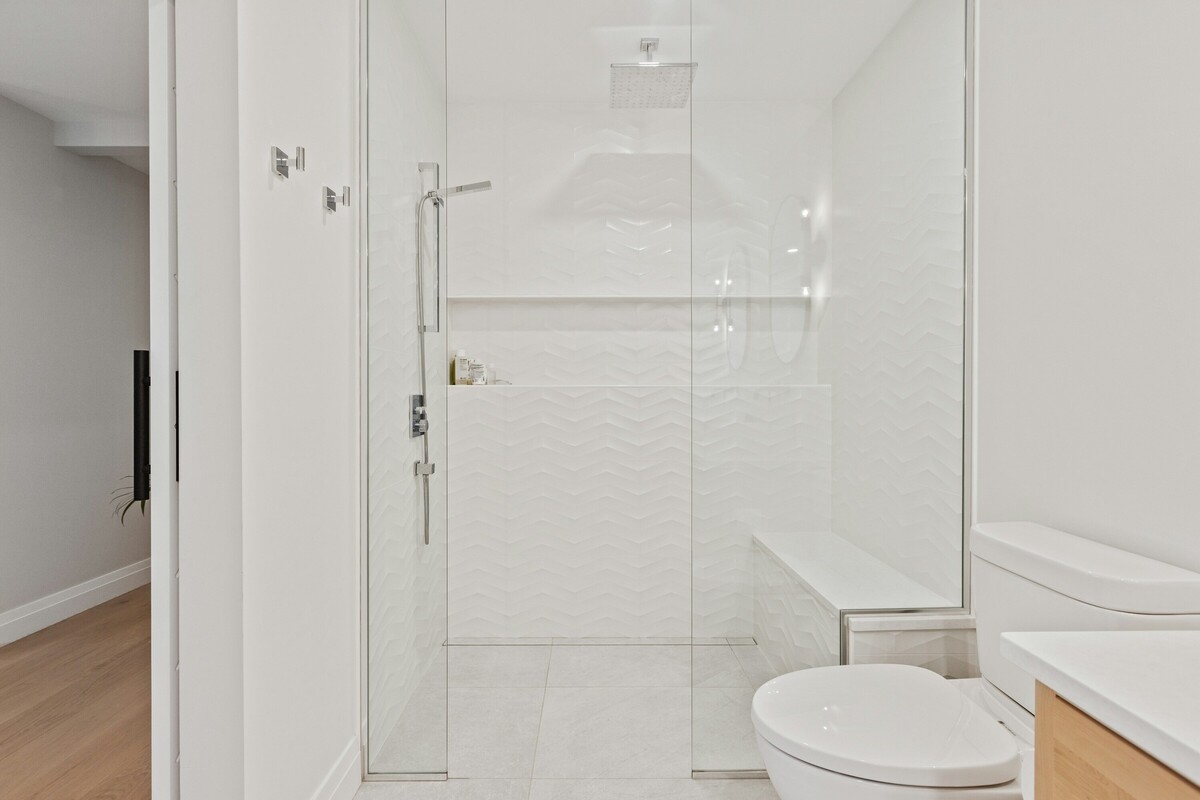
Flat is out; tactile is in. Dimensional tiles bring shadow and interest without busy patterns:
- Fluted and reeded tile on vanity walls and tub aprons
- Ribbed and chiseled-face accent walls in showers
- Picket, kit-kat (skinny stacked), and elongated hex shapes
- Matte and honed finishes over high gloss
A smart way to use texture: one feature surface — the wall behind a freestanding tub, the shower's back wall, the vanity backdrop — with calmer field tile everywhere else. You get the drama without the visual noise.
Pattern Is Back (In the Right Doses)
Checkerboard floors, patterned encaustic-look porcelain, and classic small-format mosaics are having a real moment — and in Rochester, they often qualify as restoration rather than trend. Hex and penny tile floors were original equipment in thousands of local bathrooms from the 1910s through the 1940s.
- Checkerboard in softened tones (cream and sage, sand and chocolate) rather than stark black-and-white
- Hex and penny rounds that honor a vintage home's roots, now with radiant heat underneath
- Patterned porcelain "rugs" framing a freestanding tub zone
- Vertical stacked layouts replacing the running-bond subway pattern as the modern default
And yes, subway tile survives every trend cycle — it just keeps evolving. Right now that means longer, slimmer proportions, handmade-look glazes, and stack-bond layouts instead of the classic offset.
Grout, the Quiet Trendsetter
Grout choices are doing more design work than ever. Tone-on-tone grout makes walls feel seamless and serene; contrasting grout turns simple tile into graphic pattern. Practical Rochester advice: in a hard-working family bathroom, mid-tone grout and quality stain-resistant formulations will keep the room looking fresh far longer than bright white. Epoxy and high-performance grouts cost more upfront and pay for themselves in scrubbing you never do.
If you're collecting tile screenshots and aren't sure how to turn them into a cohesive room, bring them to a design consultation with Ember Works — our in-house designers do exactly this, matching the look you love to your home's age, light, and budget.
What Tile Work Typically Costs in Rochester
Tile pricing spans a huge range, and labor is as important as material. Typical ranges in our market (not quotes):
- Quality porcelain field tile: roughly $3–$10 per square foot in material
- Handmade-look ceramic and specialty shapes: roughly $10–$30 per square foot
- True zellige, natural stone, and artisan tile: $25–$60+ per square foot
- Installed tub/shower surround: commonly $3,000–$9,000 depending on size, tile, and waterproofing scope
- Heated tile floor in a typical bathroom: often adds roughly $1,500–$4,000
One thing we'll say plainly: the waterproofing behind your shower tile matters more than the tile itself. Modern membrane systems, properly sloped pans, and correct details around niches and benches are what separate a twenty-year shower from a five-year tear-out. Beautiful tile over bad waterproofing is just expensive demolition waiting to happen.
Choosing a Look That Outlasts the Trend
Our rule of thumb for clients: put trends where they're easy to change, and timelessness where they're not. Tile is the hardest thing in a bathroom to swap, so anchor the room with enduring choices — warm neutrals, classic shapes, quality porcelain — and bring personality through one accent surface, paint, lighting, hardware, and textiles. You'll get a bathroom that feels current now and still feels right in 2040.
Let's Find Your Tile
From vintage-right hex floors in a Park Avenue four-square to a spa-calm large-format walk-in shower in Webster, Ember Works designs and builds bathrooms across Rochester, Monroe County, and Western New York — with the tile craftsmanship to match.
Ignite Your Home's Potential with Ember Works!
Call us today: 585-465-1674
Contact Us: www.emberworksroc.com/contact-us
Ready to Start Your Kitchen or Bathroom Project?
Ember Works is a design‑build firm in Rochester, NY. Our designers and our build team work under one roof, so you get a realistic budget before anything is drawn and one team accountable from the first sketch to the final walkthrough. We design and build custom kitchens and dream primary bathrooms across Rochester, Monroe County, and Western New York, backed by 60 plus years of combined hands-on experience.
‹ Back
Recent Posts
-
Interior Stairs and Railings: The Feature Hiding in Plain Sight
September 19, 2026
-

Kids' Bedrooms and Nurseries: Remodeling for a Growing Family
September 16, 2026
-
Patio or Deck? Choosing the Right Outdoor Surface for Your Yard
September 13, 2026
-
Deck Stairs and Access: Safety, Code, and Getting the Rise Right
September 10, 2026
-