



Website by 
Resources
Walk-In Pantries and Kitchen Storage Done Right
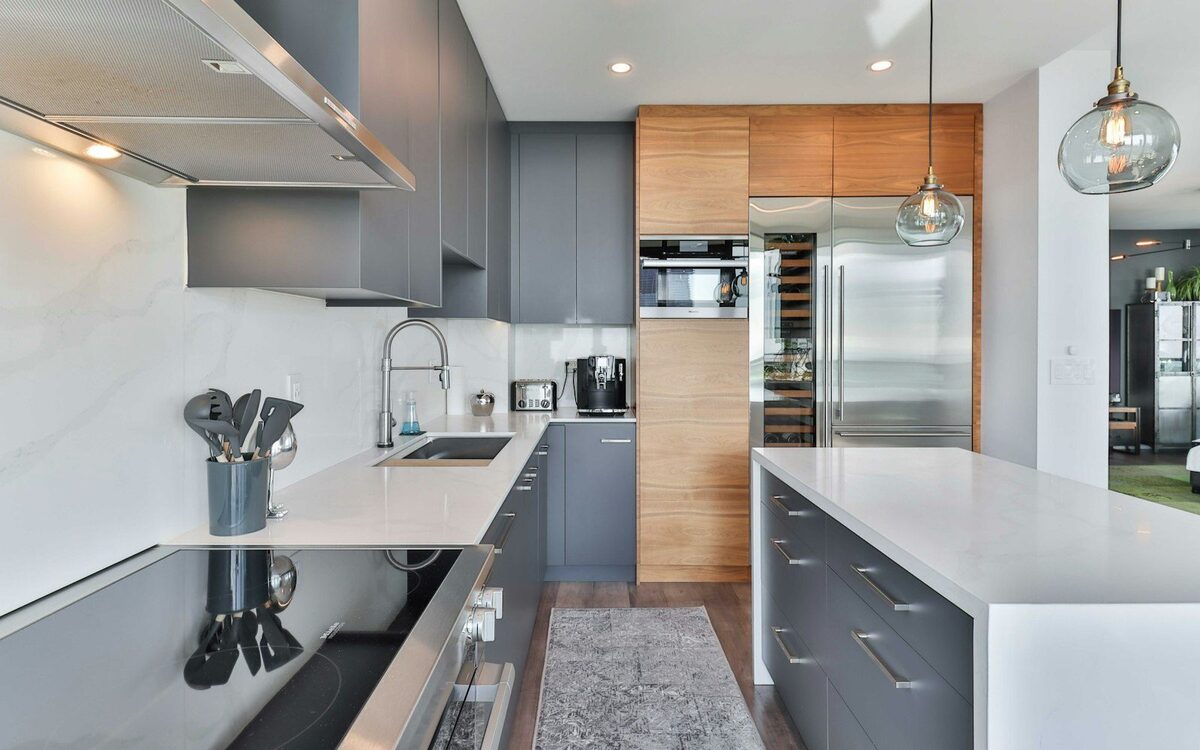
Ask Rochester homeowners what they'd change about their kitchen, and somewhere near the top of almost every list is the same word: storage. Not fancier appliances, not a bigger island — just a sensible place for the stand mixer, the Costco run, the cereal boxes, and the small appliance graveyard currently colonizing your countertops.
That's why the walk-in pantry has gone from farmhouse relic to one of the most requested features in kitchen remodels. And it makes particular sense here in Western New York, where a well-stocked pantry isn't a luxury — it's what gets you through a lake-effect snow week without a third trip to Wegmans.
Here's how to think about pantries and kitchen storage like a designer, whether you're carving one out of an older Rochester home or building one into a new kitchen plan.
Why Older Rochester Kitchens Run Out of Room
Much of Monroe County's housing stock was built between 1900 and 1960, when kitchens were working rooms, not gathering spaces. Many of those homes actually had butler's pantries originally — and many lost them in mid-century remodels that traded storage for floor space. What's left is often a kitchen with:
- Shallow cabinets that can't hold modern small appliances
- Deep corner cabinets where things go to be forgotten
- No landing zone for groceries between the door and the fridge
- Countertops doing double duty as storage
- A basement shelf "pantry" two flights from where you cook
A good storage plan fixes the system, not just the symptoms. That's the difference between adding a cabinet and designing a kitchen.
Walk-In, Reach-In, or Butler's Pantry?
"Pantry" covers a family of solutions, and the right one depends on your space, your habits, and your budget.
Walk-in pantry
A dedicated room, typically 4x4 feet up to 6x8 feet or larger, lined with open shelving and counter space. This is the storage champion: you can see everything at a glance, store bulk goods, park the slow cooker and air fryer, and even tuck in a second fridge or freezer. Walk-ins shine in remodels where we can borrow space from an adjacent closet, hallway, seldom-used formal dining corner, or a new addition.
Reach-in or cabinet pantry
A tall cabinet bank with rollout trays, swing-out racks, and door storage. It packs a surprising amount into as little as 24–48 inches of wall, making it the workhorse for kitchens that can't spare a room. Modern rollout hardware means nothing gets lost in the back.
Butler's pantry / scullery
A pass-through space between kitchen and dining area with counters, cabinets, and often a small sink or beverage fridge. It's the entertainer's pick — a staging area that keeps party mess out of sight — and a natural fit for restoring older Rochester homes that had one originally.
What Makes a Walk-In Pantry Actually Work
We've all seen pantries that became junk closets within a year. The difference is design. The best pantries follow a few rules:
- Shallow shelves beat deep ones. 10–14 inches deep means one row of visible items, not archaeology
- Vary shelf heights for cereal boxes, cans, and appliance parking
- A counter at working height for appliances you use weekly but don't want out
- Outlets inside the pantry so the toaster and coffee maker can live there, plugged in
- Lighting that turns on automatically when the door opens
- Ventilation to keep the space dry and food fresh year-round
- Floor space for bulk bins — pet food, bottled water, the warehouse-club haul
Think about your actual shopping habits, too. If your household runs on bulk buying, design for it: deeper floor zones, sturdy shelves rated for canned-goods weight, and clearance for a chest freezer if that's part of your life.
Storage Upgrades Beyond the Pantry
A pantry solves bulk storage, but day-to-day kitchen function comes from dozens of smaller decisions. In a full kitchen remodel, these are the upgrades our clients thank us for a year later:
- Deep drawers instead of base cabinet doors for pots and dishes
- A dedicated appliance garage that hides the toaster behind a retractable door
- Corner solutions — lazy Susans or pull-out systems that reclaim dead space
- Vertical dividers for sheet pans and cutting boards
- A trash/recycling pull-out (non-negotiable in our book)
- Drawer organizers built for your actual utensils, not generic inserts
- Toe-kick drawers for flat items in tight kitchens
This is where design-build earns its keep. Because Ember Works has in-house designers working alongside a build team with 60+ years of combined hands-on experience, storage gets planned around how you cook — and then built to the inch, including the quirks of older Rochester framing where walls are rarely square and "standard" sizes rarely fit.
If you're dreaming about a kitchen where everything finally has a home, book a design consultation with Ember Works and bring your storage complaints — we love solving them.
Where Does the Space Come From?
"We'd love a walk-in pantry, but we don't have room" is usually wrong. In remodel after remodel, we find pantry space hiding in plain sight:
- An adjacent coat closet or underused hallway
- The back corner of an attached garage
- A rarely-used formal dining room that can give up 30 square feet
- Space recaptured by relocating a basement stair door
- A small bump-out addition off the kitchen wall
- The old chimney chase in a house that's converted to high-efficiency heat
An experienced design team will walk your home looking for these opportunities before recommending an addition. Often the cheapest square footage is the square footage you already own.
What Pantry Projects Typically Cost in Rochester
As always, these are typical ranges for our market, not quotes — your home and finishes will move the numbers:
- Cabinet pantry upgrade with quality rollouts: roughly $2,000–$6,000
- Converting an existing closet to a fitted walk-in pantry: roughly $3,500–$10,000
- Building a new walk-in pantry within a kitchen remodel (wall changes, electrical, finishes): roughly $10,000–$25,000
- Butler's pantry with cabinetry, counters, and a beverage center: roughly $15,000–$35,000+
Rolled into a full kitchen remodel, pantry work is usually more cost-effective than tackling it standalone, since trades, permits, and finishes are already on site.
A Pantry Pays You Back Every Single Day
Some upgrades you appreciate occasionally. Storage you appreciate every morning. Clear counters change how a kitchen looks; a real pantry changes how it works — fewer shopping trips, less food waste, faster cleanup, and a kitchen that stays photo-ready without heroic effort. Real estate pros in our area consistently note that smart storage is one of the first things buyers comment on in a listing.
Let's Design Storage Around Your Life
Whether it's a full kitchen remodel with a walk-in pantry or a clever reach-in that finally tames the chaos, Ember Works designs and builds kitchen storage for the way Rochester families actually live. We serve Rochester, Monroe County, and Western New York.
Ignite Your Home's Potential with Ember Works!
Call us today: 585-465-1674
Contact Us: www.emberworksroc.com/contact-us
Ready to Start Your Kitchen or Bathroom Project?
Ember Works is a design‑build firm in Rochester, NY. Our designers and our build team work under one roof, so you get a realistic budget before anything is drawn and one team accountable from the first sketch to the final walkthrough. We design and build custom kitchens and dream primary bathrooms across Rochester, Monroe County, and Western New York, backed by 60 plus years of combined hands-on experience.
‹ Back
Recent Posts
-

Flooring Face-Off: Hardwood, Engineered, Vinyl Plank, and Tile
October 22, 2026
-
Shower Systems: Valves, Rain Heads, and Body Sprays
October 19, 2026
-
Inside the Cabinets: Pull-Outs and Fittings That Earn Their Keep
October 16, 2026
-
Sump Pumps and Backup Power: Basement Insurance Before Winter
October 13, 2026
-
Shower Waterproofing: The Membrane Behind Your Tile You Never See
October 10, 2026