



Website by 
Resources
Turning Your Rochester Basement Into a Home Theater or Rec Room
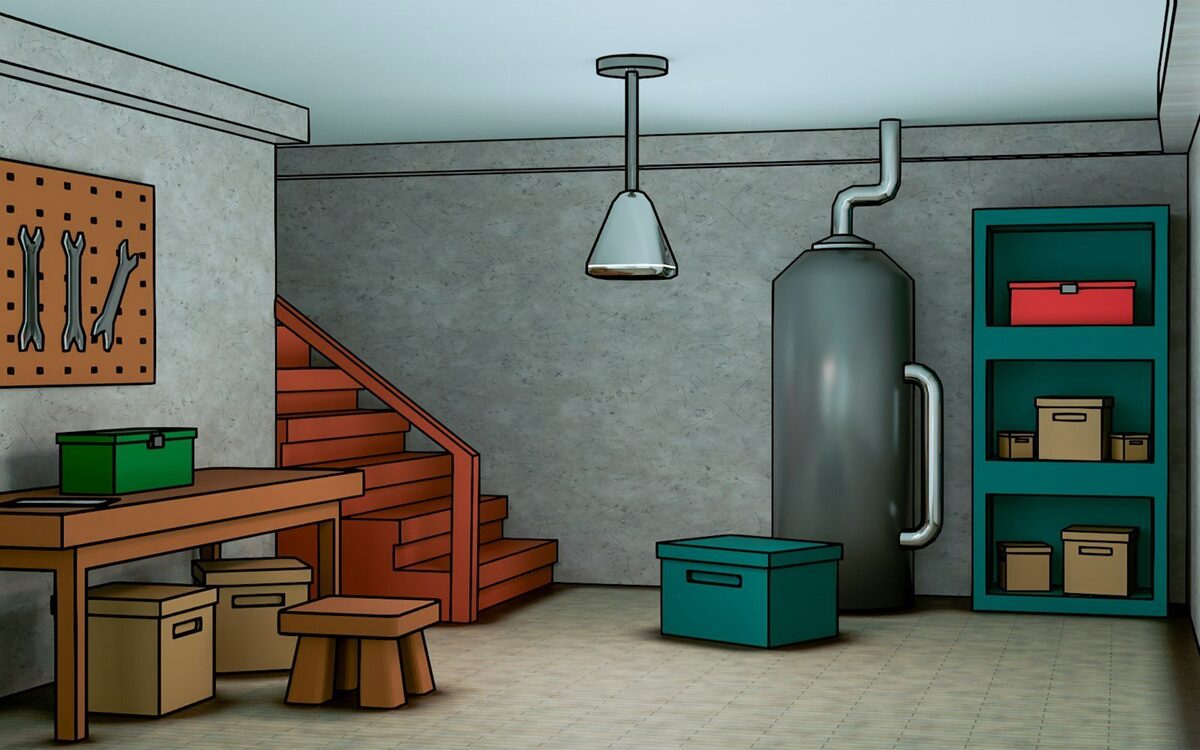
Somewhere under your Rochester home, there's a floor of square footage you've already paid for and probably aren't using. Maybe it's holding boxes of holiday decorations and a treadmill nobody's touched since March. Meanwhile, the family is fighting over one TV upstairs, and the kids have nowhere to send their friends on a snowy Saturday.
That's exactly why finished basements — and home theaters and rec rooms in particular — are one of the smartest remodels in Western New York. When winter keeps everyone indoors from December through March, an extra living space stops being a luxury and starts being sanity.
But Rochester basements come with their own personality, especially in our older housing stock. Here's what it really takes to turn yours into a space the whole family fights over — in a good way.
Start With Moisture, Not Movie Screens
We get it: the fun part is picking the projector. But in Monroe County, the first conversation about any basement project is water. Our clay-heavy soils, snowmelt cycles, and freeze-thaw springs mean even a "dry" basement deserves a hard look before a single stud goes up.
Before finishing begins, a thorough basement evaluation should cover:
- Foundation walls — cracks, efflorescence (that white chalky residue), and signs of past seepage
- Grading and gutters — water should be moving away from your foundation, not toward it
- Sump pump condition — and whether a battery backup makes sense for power outages during storms
- Humidity levels — most finished basements here benefit from a dedicated dehumidifier
- Drainage solutions — interior drain tile or exterior waterproofing where history warrants it
Skipping this step is how a beautiful theater room becomes a moldy demolition project three years later. Solve the water first, then build the fun.
Ceiling Height, Egress, and the Code Questions
Many Rochester homes built in the early-to-mid 1900s have basements that weren't designed as living space. That doesn't rule them out — it just shapes the design.
- Ceiling height — finished habitable space generally needs around 7 feet of headroom; ductwork and beams can often be rerouted or boxed in strategically
- Egress — if you're adding a bedroom, code requires a proper egress window or door; even for a rec room, more natural light and a safe exit are worth considering
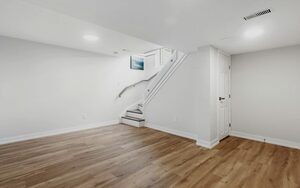
- Stairs — older basement stairs are often steep and narrow, and a remodel is the right moment to bring them up to modern standards
- Permits — finished basements in Monroe County municipalities require permits and inspections, which protect you at resale time
A design-build team handles all of this as part of the plan, so there are no surprises mid-project — or worse, when you go to sell.
Home Theater or Rec Room? Or Both?
The best basement designs we build usually aren't one thing. They're zoned.
The Dedicated Theater Zone
If movie nights are the priority, a few design decisions make all the difference:
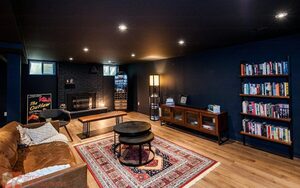
- Light control — basements are naturally dark, which is a genuine advantage; dimmable, layered lighting completes the effect
- Sound management — insulated walls and ceilings keep explosions downstairs and sleeping kids asleep upstairs
- Wiring done early — speaker wire, HDMI runs, and conduit for future upgrades all go in before drywall, never after
- Comfortable sightlines — screen size and seating distance should be planned together, not eyeballed
The Rec Room Zone
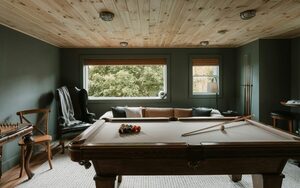
For game tables, a play area, or a basement bar, think about durability and flexibility: resilient flooring like luxury vinyl plank that shrugs off spills and stays warmer than tile, plenty of outlets, and open floor space that can change roles as your kids grow. A half bath down there is a popular add-on — nobody wants to pause the game for a trip upstairs.
Keeping a Rochester Basement Warm and Comfortable
An uncomfortable basement doesn't get used, no matter how nice the TV is. In our climate, comfort comes down to a few fundamentals:
- Insulated walls — rigid foam against foundation walls keeps the space warm and helps control condensation
- Proper subfloor or flooring choice — a thermal break between concrete and your feet matters in January
- Heating strategy — extending your existing system, adding a ductless mini-split, or radiant options depending on your home
- Dehumidification — for Western New York's muggy summers, when basements collect moisture from the air
- Bright, layered lighting — recessed fixtures and warm lamps fight the "cave" feeling year-round
What a Finished Basement Typically Costs in the Rochester Market
Pricing depends heavily on your basement's starting condition and your finish level, but here are typical planning ranges we see locally — general figures, not quotes:
- Straightforward rec room finish: roughly $40 to $70 per square foot
- Mid-range finish with a bathroom or wet bar: roughly $70 to $110 per square foot
- Dedicated theater build-out: often an additional $10,000 to $35,000+ depending on equipment and acoustic treatment
- Moisture remediation, if needed: commonly $3,000 to $12,000 before finishing begins
For most Rochester homes, that means a full basement transformation lands somewhere between $35,000 and $90,000 — often the most affordable way to add real living space, since the foundation, walls, and roof already exist. Compare that to the cost of an addition, and the math gets compelling fast.
Wondering what your basement could realistically become? Set up a consultation with Ember Works and we'll evaluate the space, flag any moisture or structural concerns, and sketch out options that fit your budget.
Why Design-Build Is the Right Approach Downstairs
Basements are where design and construction realities collide: ductwork in the wrong place, a beam right where the screen should go, a sump pit in the corner you wanted for seating. When your designer and your builder are the same team, those conflicts get solved on paper instead of mid-project.
Ember Works is a true design-build firm — in-house designers working side by side with a build crew that brings 60+ years of combined hands-on experience to Rochester-area homes. We've worked in the basements of this region's older housing stock for a long time, and we know where the surprises hide.
Make This the Last Winter Your Basement Sits Empty
Next winter is coming either way. The question is whether your family spends it crowded into one living room — or spread out in a warm, dry, purpose-built space downstairs with the game on and popcorn going. Let's start the conversation now so the space is ready when the snow flies.
Ignite Your Home's Potential with Ember Works!
Call us today: 585-465-1674
Contact Us: www.emberworksroc.com/contact-us
Ready to Start Your Kitchen or Bathroom Project?
Ember Works is a design‑build firm in Rochester, NY. Our designers and our build team work under one roof, so you get a realistic budget before anything is drawn and one team accountable from the first sketch to the final walkthrough. We design and build custom kitchens and dream primary bathrooms across Rochester, Monroe County, and Western New York, backed by 60 plus years of combined hands-on experience.
‹ Back
Recent Posts
-

Flooring Face-Off: Hardwood, Engineered, Vinyl Plank, and Tile
October 22, 2026
-
Shower Systems: Valves, Rain Heads, and Body Sprays
October 19, 2026
-

Inside the Cabinets: Pull-Outs and Fittings That Earn Their Keep
October 16, 2026
-
Sump Pumps and Backup Power: Basement Insurance Before Winter
October 13, 2026
-
Shower Waterproofing: The Membrane Behind Your Tile You Never See
October 10, 2026