





Website by 
Resources
How to Live Through a Remodel: A Survival Guide for Rochester Homeowners

There's a moment in almost every remodel when the novelty wears off. The coffee maker is living on a folding table in the dining room, there's a fine layer of dust on everything you own, and you'd trade a kidney for one quiet morning without a tile saw running. If you're planning a kitchen, bathroom, or whole-home project in Rochester, here's the good news: that moment doesn't have to define your experience.
Living through a remodel is a skill, and like most skills, it gets a lot easier with a little preparation. After 60+ years of combined hands-on experience in Rochester homes, our build team has seen what separates families who sail through a project from families who count the days like a prison sentence. Almost all of it comes down to planning done before the first hammer swings.
This guide covers the practical stuff nobody tells you: how to set up a temporary kitchen, where to put the dog, how Rochester weather changes the game, and what to ask your contractor before demo day.
Start With a Realistic Picture of the Timeline
The single biggest source of remodel stress isn't dust or noise. It's mismatched expectations. If you believe a project will take four weeks and it takes nine, every day past week four feels like a failure, even if nine weeks was always the realistic number.
Before work begins, sit down with your contractor and walk through the schedule in plain language. With a true design-build firm like Ember Works, the people designing your project and the people building it work under the same roof, so the timeline you're given reflects what the crew can actually deliver, not a salesperson's best guess.
Ask these questions up front:
- Which weeks will be the loudest and dustiest?
- When will water, power, or heat be shut off, and for how long?
- What are the long-lead items (cabinets, windows, tile) and have they been ordered?
- What's the plan if we open a wall and find a surprise?
- Who do I call when I have a question mid-project?
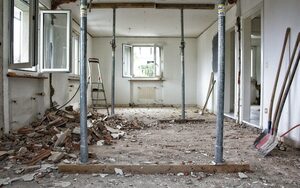
In older Rochester housing stock, that last "surprise" question matters. Homes in Monroe County built in the 1920s through 1950s often hide knob-and-tube wiring, galvanized plumbing, or undersized framing behind plaster walls. A good contractor builds contingency into the schedule and the budget. A typical rule of thumb is to hold back 10–15% of your budget as a contingency for the unexpected.
Set Up a Temporary Kitchen That Actually Works
If your kitchen is the project, this is the section to bookmark. Families who set up a real temporary kitchen, not just a microwave on a chair, consistently report a far less stressful experience.
Your survival kitchen checklist
- A microwave, toaster oven, and slow cooker or Instant Pot
- A folding table with a wipeable surface
- A small fridge, or clear a path to your main fridge if it's been relocated
- Paper plates and a dish bin you can carry to a bathroom or utility sink
- A coffee station, because nobody should remodel uncaffeinated
- One box of essential utensils so you're not digging through packed bins
Pick a location away from the work zone. A finished basement, a corner of the dining room, or even a heated garage in summer all work. And give yourself permission to lean on Rochester's food scene a night or two a week. Budget a modest takeout allowance into the project from the start so it feels like a plan, not a failure.
Contain the Dust Before It Contains You
Dust is the thing homeowners underestimate most. Plaster dust from older Western New York homes is especially fine, and it travels.
A professional crew should handle the heavy lifting here, with plastic containment walls, zippered doorways, floor protection, and HVAC returns sealed off in the work zone. But you can help yourself too:
- Move or cover furniture in adjacent rooms before demo starts
- Swap your furnace filter at the start, middle, and end of the project
- Run a portable HEPA air purifier in the rooms you live in
- Keep one "clean room" sacred, usually a bedroom, with the door closed
- Pack away electronics and anything with a fan that pulls in air
Ask your contractor how they handle daily cleanup. A crew that broom-cleans and tidies the site every afternoon is telling you something about how they'll treat the rest of your project.
Plan Around Rochester's Seasons
Timing a remodel in Western New York isn't just about contractor availability. The calendar changes how livable your home is during construction.
Winter projects
Interior work like kitchens, bathrooms, and basements runs year-round here, and winter can actually be a great time to get on a schedule. But if exterior walls are being opened or heat is interrupted, you'll feel a January day fast. Ask how the crew will keep the house warm and how openings will be sealed each night.
Summer projects
Additions, decks, and porch work love Rochester summers, but so does everyone else's project. Crews book up. If you want an outdoor project finished before fall, the design conversation should start months earlier, often in late winter.
Kids, Pets, and Daily Routines
A job site is genuinely hazardous for curious kids and anxious pets, and an open front door during material deliveries is how dogs end up touring the neighborhood.
- Set firm boundaries: the work zone is off-limits, full stop
- Arrange doggy daycare or a friend's house on demo and floor-finishing days
- Tell your crew about pets so doors and gates stay closed
- Shift noisy work expectations around nap schedules where possible
- Keep school-morning essentials out of packed boxes
Some families choose to stay elsewhere during the most disruptive week or two, especially for whole-home projects. Others stay put the entire time. There's no wrong answer, but decide before the project starts, not at 6 a.m. on day three of jackhammering.
Communicate Early, Often, and in One Place
Most mid-project friction comes from small questions that didn't get asked. Where should the outlet go? Is this the right grout color? Agree with your contractor on a single communication channel and a regular check-in, even just ten minutes once a week, to review progress and upcoming decisions.
Make your selections early. Tile, fixtures, paint, and hardware chosen before construction begins keep the schedule moving and your blood pressure down. This is where design-build really pays off, because design decisions and construction realities get reconciled before they collide in your hallway.
If you're getting ready for a project and want a team that plans for real life, not just the blueprint, reach out to Ember Works for a consultation and we'll show you how we keep homeowners comfortable from demo day to final walkthrough.
Remember Why You Started
Somewhere around the midpoint, every remodel looks worse before it looks better. Walls are open, nothing is finished, and progress feels invisible. That's normal. Keep a photo of your design renderings on the fridge (wherever the fridge currently lives) and take a progress picture every Friday. The before-and-after will be worth it.
Ready for a Remodel You Can Actually Live Through?
A smooth project doesn't happen by accident. It happens when designers, builders, and homeowners are on the same team from day one. That's exactly how Ember Works approaches every kitchen, bathroom, addition, and basement across Rochester and Monroe County.
Ignite Your Home's Potential with Ember Works!
Call us today: 585-465-1674
Contact Us: www.emberworksroc.com/contact-us
Ready to Start Your Kitchen or Bathroom Project?
Ember Works is a design‑build firm in Rochester, NY. Our designers and our build team work under one roof, so you get a realistic budget before anything is drawn and one team accountable from the first sketch to the final walkthrough. We design and build custom kitchens and dream primary bathrooms across Rochester, Monroe County, and Western New York, backed by 60 plus years of combined hands-on experience.
‹ Back
Recent Posts
-

Flooring Face-Off: Hardwood, Engineered, Vinyl Plank, and Tile
October 22, 2026
-
Shower Systems: Valves, Rain Heads, and Body Sprays
October 19, 2026
-

Inside the Cabinets: Pull-Outs and Fittings That Earn Their Keep
October 16, 2026
-
Sump Pumps and Backup Power: Basement Insurance Before Winter
October 13, 2026
-
Shower Waterproofing: The Membrane Behind Your Tile You Never See
October 10, 2026