




Website by 
Resources
Finishing Your Basement in Rochester: What It Costs and What It Adds to Your Home
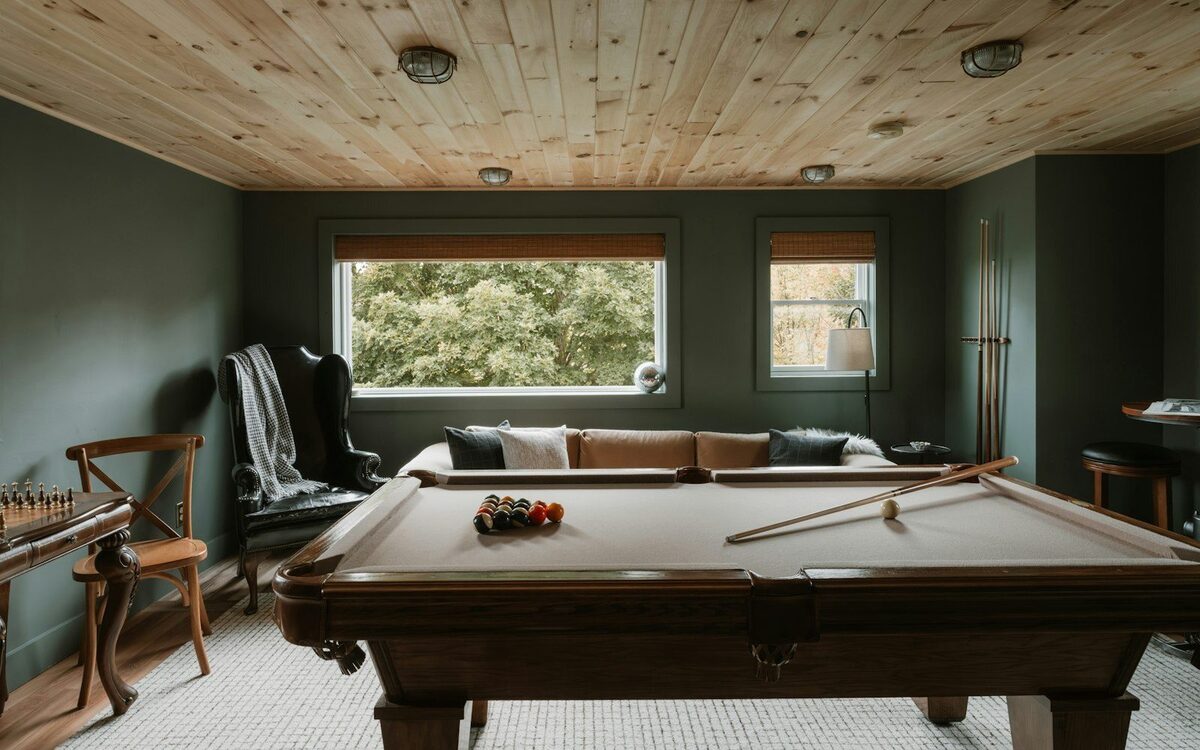
In a lot of parts of the country, "more living space" means building out or up. In Rochester, you're often already standing on the answer: a full-height basement under your whole house, sitting there half-used, holding a treadmill, some holiday bins, and forty years of paint cans.
Finishing a basement is one of the most cost-effective ways to add real, usable square footage to a Rochester home — often at a fraction of the per-square-foot cost of an addition. But it's also a project where Western New York throws some curveballs: older foundations, high water tables in spring, and the moisture realities of building below grade in a freeze-thaw climate.
Here's an honest look at what basement finishing typically costs in the Rochester market, what it adds to your home's value and your daily life, and where the money actually goes.
What Does It Typically Cost to Finish a Basement in Rochester?
Every basement is different — especially in Monroe County, where you might be working with a 1920s stone foundation in the South Wedge or a 1990s poured wall in Penfield. That said, here are typical ranges we see in the Rochester market (these are ballpark planning figures, not quotes):
- Basic finish (open rec room, drywall, flooring, lighting, simple trim): roughly $30,000–$55,000
- Mid-range finish (rec room plus a bedroom or office, half bath, better finishes): roughly $55,000–$90,000
- High-end finish (full bath, wet bar or kitchenette, home theater, custom built-ins): roughly $90,000–$150,000+
On a per-square-foot basis, most finished basements in our area land somewhere in the $50–$110 per square foot range depending on scope — compare that to additions, which commonly run two to three times that once you factor in foundations, roofing, and exterior work.
Where the Money Actually Goes
Homeowners are sometimes surprised by what drives basement budgets. It's usually not the drywall.
- Moisture management: drainage, sump systems, vapor barriers, and proper wall assemblies
- Plumbing: adding a bathroom often means breaking concrete or installing an ejector pump
- Egress: a code-compliant escape window and well if you're adding a bedroom
- Mechanical work: relocating ducts, adding heat to the space, upgrading electrical
- Ceiling solutions: working around beams, pipes, and ductwork in older homes
- Finishes: flooring rated for below-grade use, lighting, trim, doors
In Rochester's older housing stock, the first three items matter most. A beautiful basement built over an unsolved water problem is just an expensive mistake on a delay timer.
The Rochester Reality: Solve Water First
We can't say this strongly enough. Between spring snowmelt, clay-heavy soils in parts of Monroe County, and century-old foundations, many Rochester basements take on some moisture. Before any framing happens, a good design-build team will:
- Inspect for active leaks, efflorescence, and seasonal dampness
- Verify grading and downspout discharge outside
- Test or install a reliable sump pump — ideally with battery backup
- Choose wall and floor assemblies that tolerate below-grade humidity
- Plan dehumidification into the design, not as an afterthought
Budget-wise, moisture prep can add a few thousand dollars to a project — and it's the best money in the whole budget. It protects everything built on top of it.
What a Finished Basement Adds to Your Home's Value
Remodeling industry reports consistently suggest basement finishes recoup a meaningful share of their cost at resale — often cited in the 60–75% range, depending on quality and market. In Rochester specifically, a few things work in your favor:
- Our market has lots of modest-footprint homes where buyers crave extra space
- Finished square footage is comparatively scarce in older housing stock, so it stands out in listings
- A legal basement bedroom or full bath can move your home into a different buyer pool entirely
- Long winters make indoor recreation space genuinely valuable here, not just a listing line
One honest caveat: appraisers typically value below-grade square footage at less than above-grade space. The bigger return is often in marketability — homes with well-finished basements tend to show better and sell faster.
The Value You Can't Put on a Spreadsheet
Resale math aside, think about what an extra 600–900 square feet does for daily life through a Rochester winter:
- A playroom that keeps the LEGO explosion off your living room floor from November to April
- A real home office instead of a corner of the bedroom
- A guest suite for family visiting over the holidays
- A home gym you'll actually use when it's 12 degrees outside
- A media room for Bills games when the weather says stay home
For a lot of our clients, the basement finish is what makes staying in a house they love possible — instead of moving for one more room.
Why Design-Build Makes Sense for Basements
Basements are where surprises live: undersized beams, mystery plumbing, knob-and-tube wiring, low-hanging ducts. A true design-build approach — where the designers and the build team work under one roof — means the people drawing your layout are talking daily with the people who know what's actually behind that wall and how much it costs to move it. Plans get reality-checked early, budgets stay honest, and you're not stuck refereeing between an independent designer and a contractor when something unexpected turns up.
With 60+ years of combined hands-on experience in Rochester-area homes, our team has seen just about every basement condition Monroe County can produce. If you're trying to figure out whether your basement is a good candidate, set up a consultation with Ember Works and we'll walk the space with you and give you a realistic picture before you commit to anything.
Quick Checklist: Is Your Basement a Good Candidate?
- Ceiling height of roughly 7 feet or more under beams and ducts
- No chronic, unresolved water intrusion (or a willingness to fix it first)
- Dry, structurally sound foundation walls
- A furnace and electrical panel with capacity to serve the new space
- A feasible egress path if bedrooms are in the plan
Plenty of basements that fail one of these tests can still be finished — it just needs to be designed into the budget honestly from day one.
Ready to Put That Square Footage to Work?
You already own the space. The question is whether it keeps storing paint cans or starts earning its keep. If you're ready to find out what your basement could become — and what it would realistically cost — let's talk.
Ignite Your Home's Potential with Ember Works!
Call us today: 585-465-1674
Contact Us: www.emberworksroc.com/contact-us
Ready to Start Your Kitchen or Bathroom Project?
Ember Works is a design‑build firm in Rochester, NY. Our designers and our build team work under one roof, so you get a realistic budget before anything is drawn and one team accountable from the first sketch to the final walkthrough. We design and build custom kitchens and dream primary bathrooms across Rochester, Monroe County, and Western New York, backed by 60 plus years of combined hands-on experience.
‹ Back
Recent Posts
-
Flooring Face-Off: Hardwood, Engineered, Vinyl Plank, and Tile
October 22, 2026
-
Shower Systems: Valves, Rain Heads, and Body Sprays
October 19, 2026
-

Inside the Cabinets: Pull-Outs and Fittings That Earn Their Keep
October 16, 2026
-
Sump Pumps and Backup Power: Basement Insurance Before Winter
October 13, 2026
-
Shower Waterproofing: The Membrane Behind Your Tile You Never See
October 10, 2026